Interviews ~
Senior Thesis Project by Ashley E. Osorio
Over the span of a few months, I met many wonderful Latino business owners and workers who were willing to share their stories with me. I conducted small interviews with each of them focused on what reasons or dreams led to them sacrificing so much in order to be in the United States. Unfortunately, we are living in a time where the media influences our perceptions of others, and discrimination and prejudiced judgments have been normalized towards people of color. I believe if you are willing to spare a few minutes to hear someone’s story, you’d realize how much we all have in common as human beings.
Full Interviews Below:
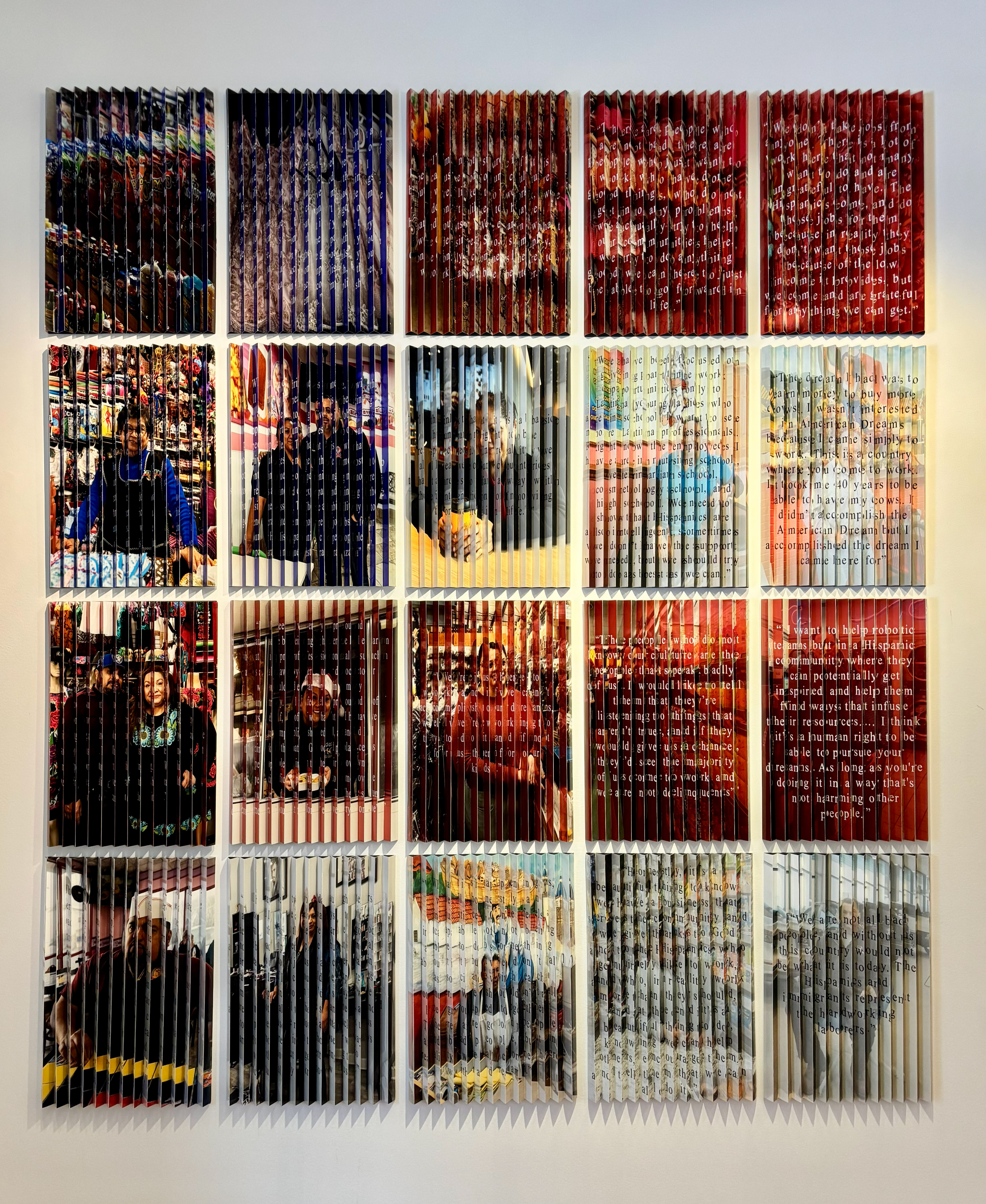
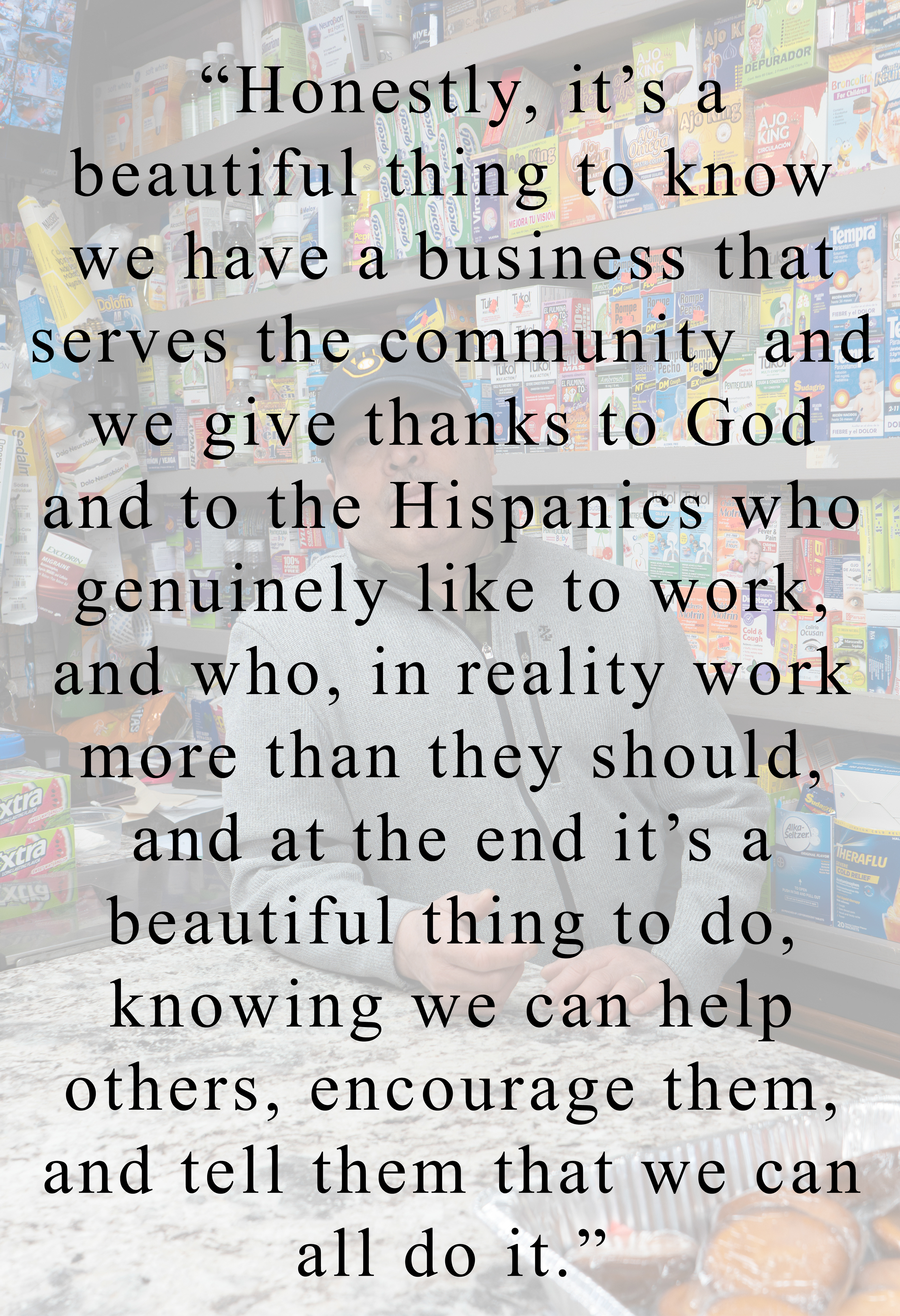
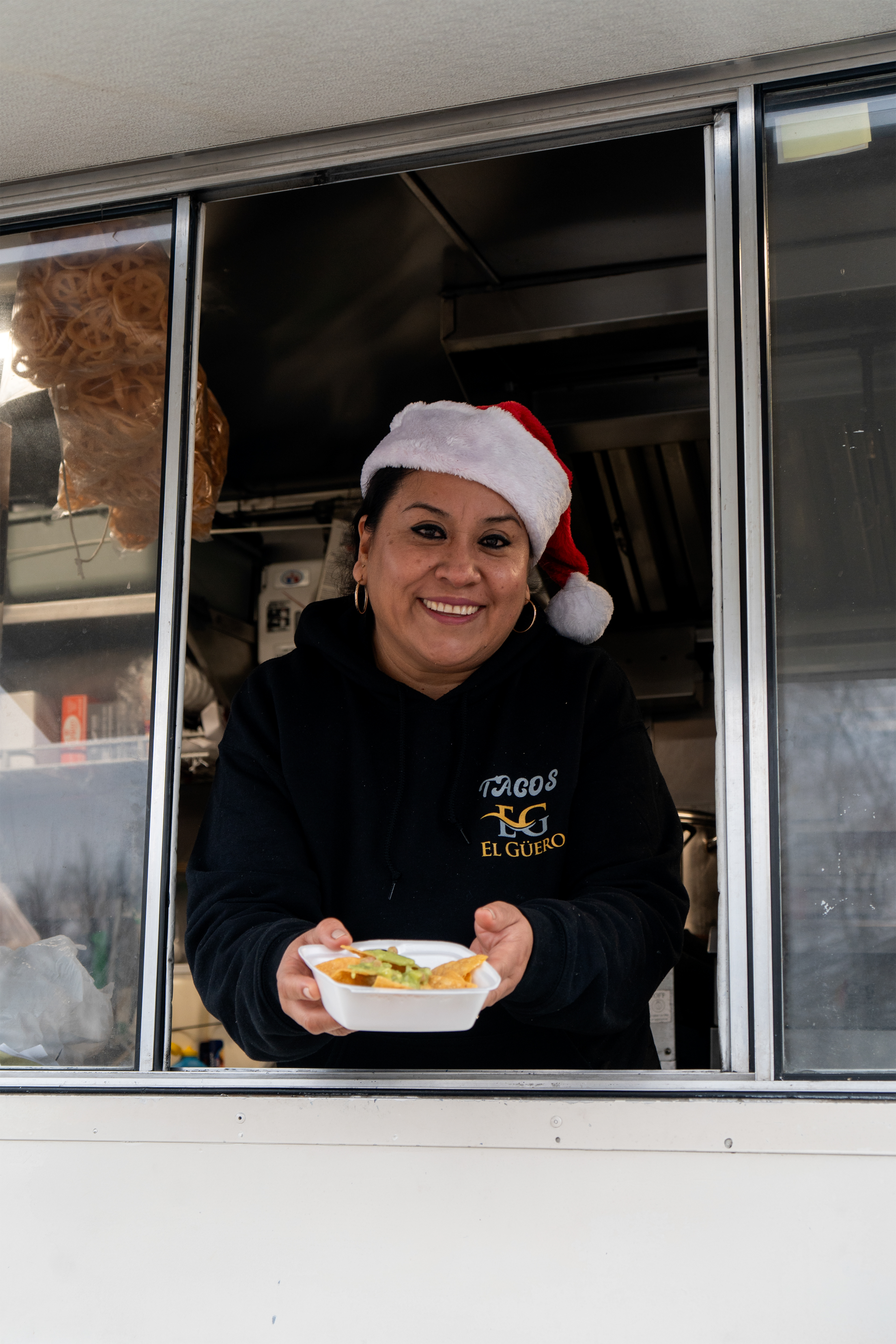
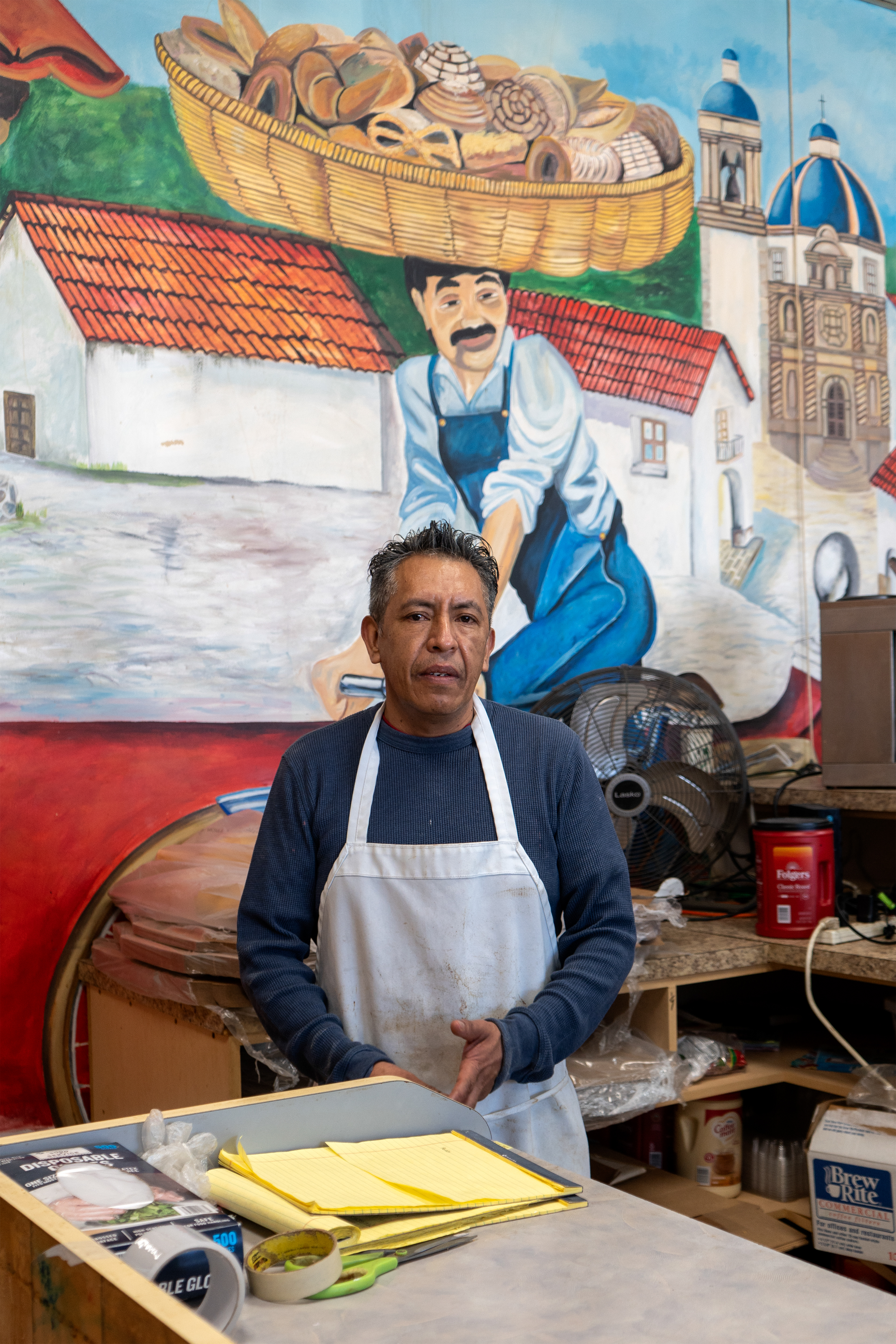
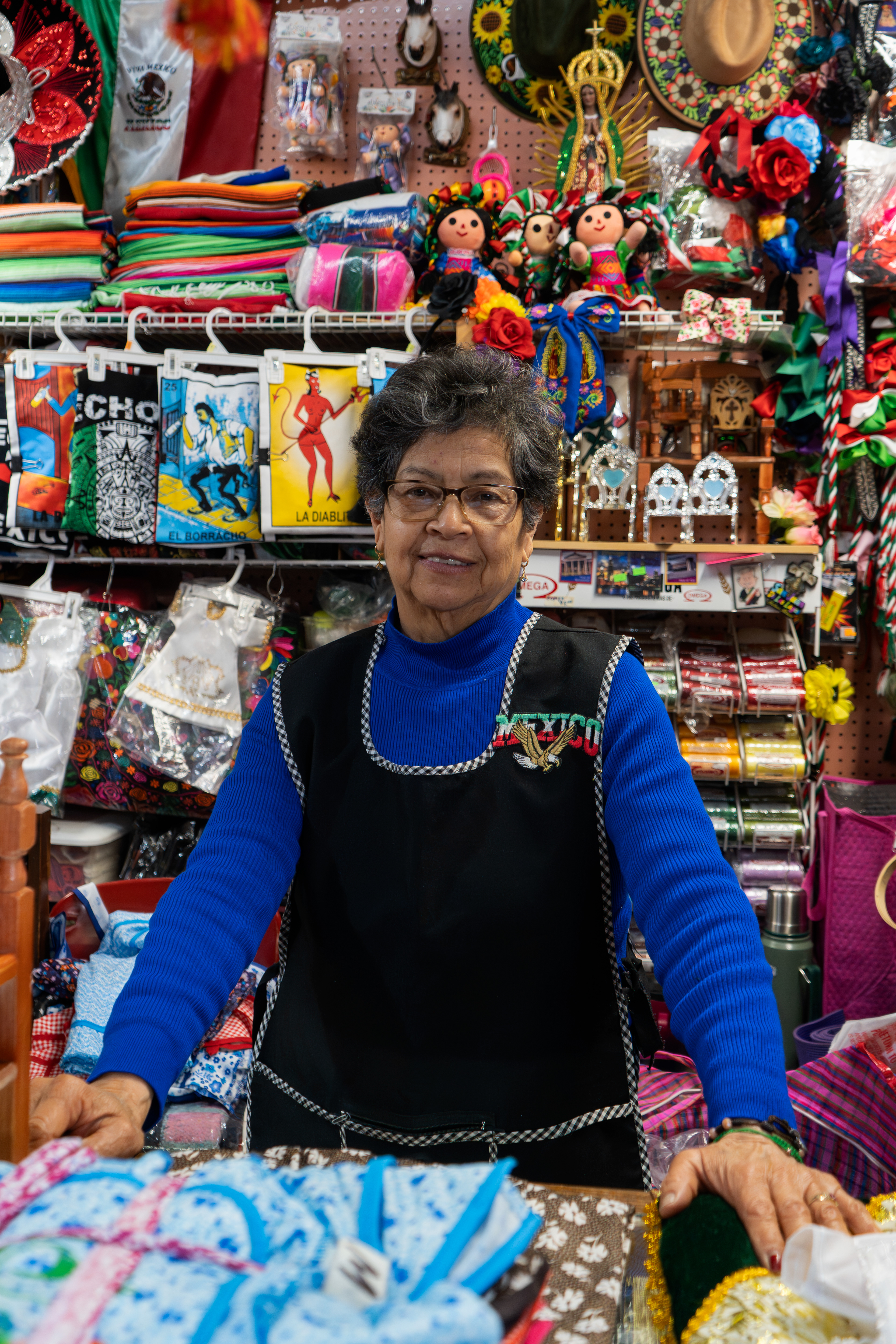
Installation at Charles Allis Museum, Milwaukee WI
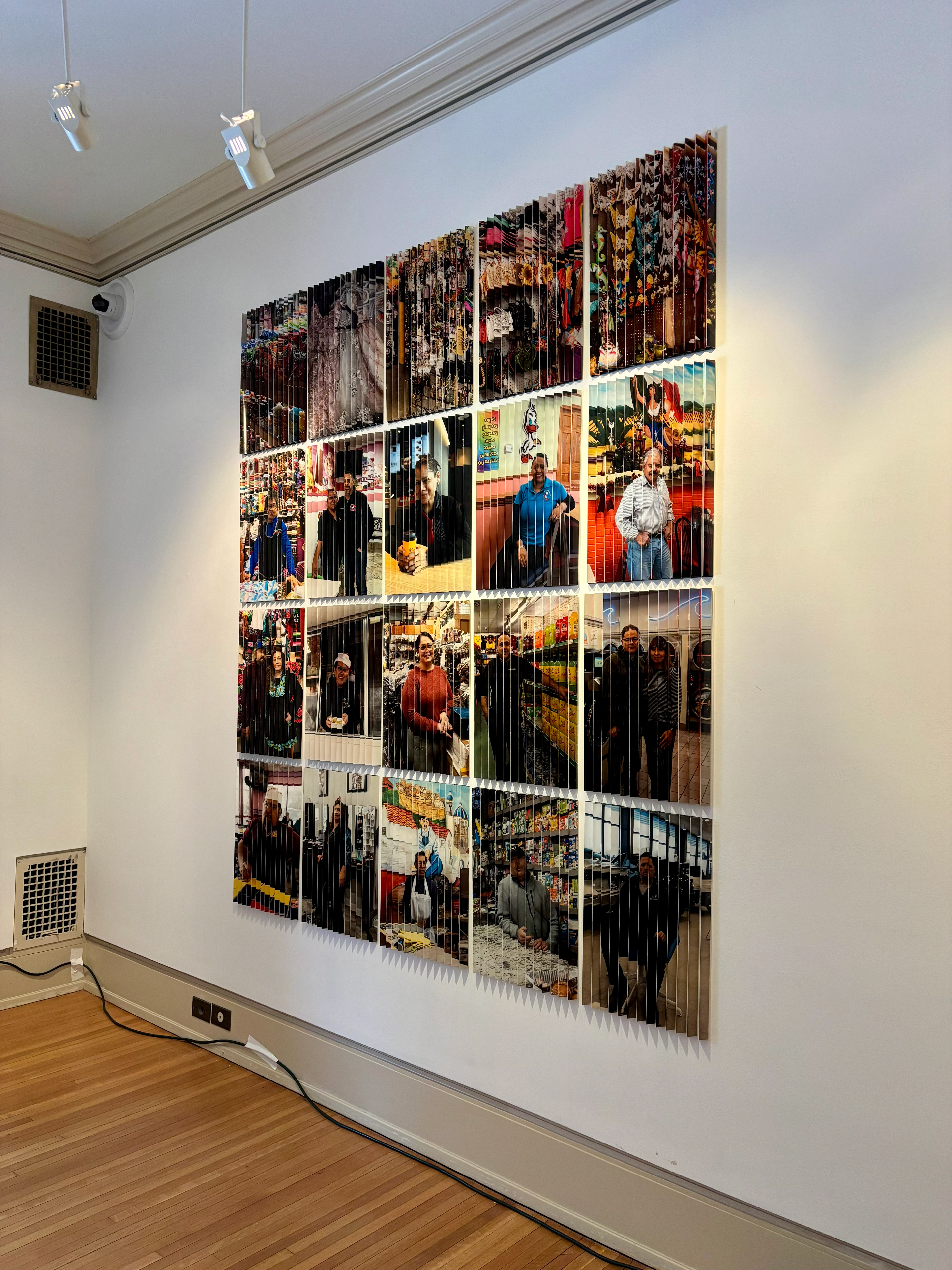
Installation at Charles Allis Museum, Milwaukee WI
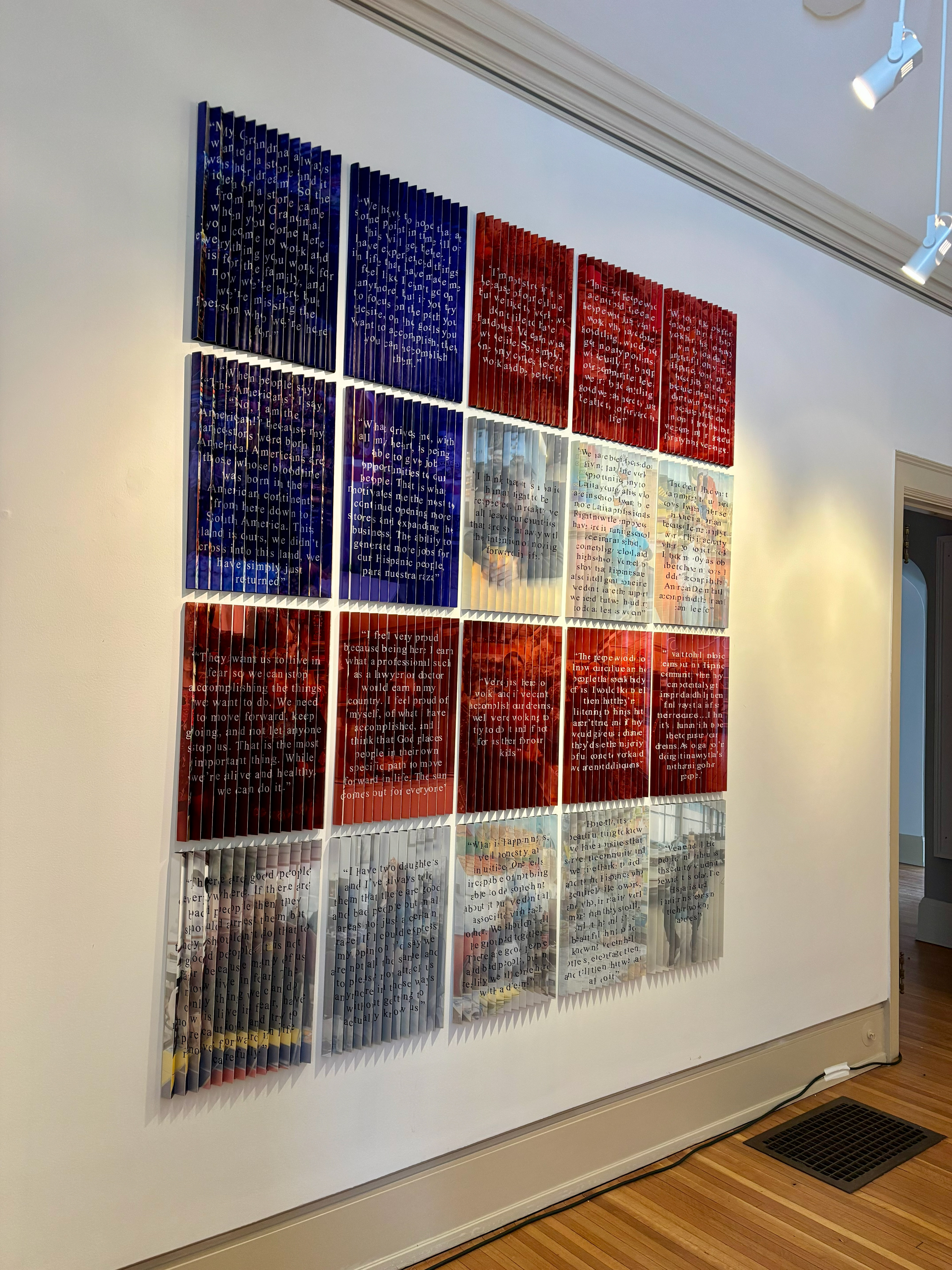
Installation at Charles Allis Museum, Milwaukee WI
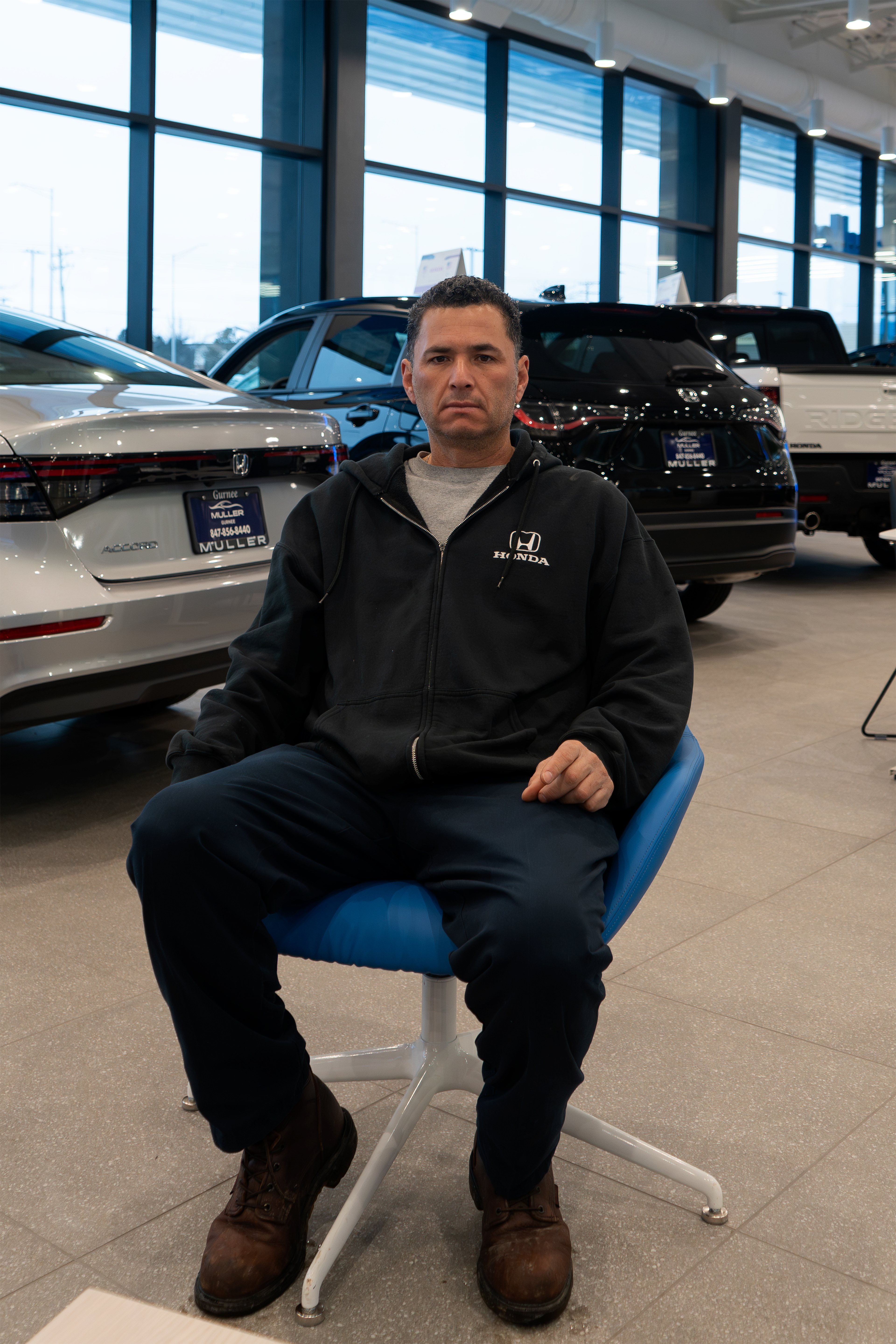
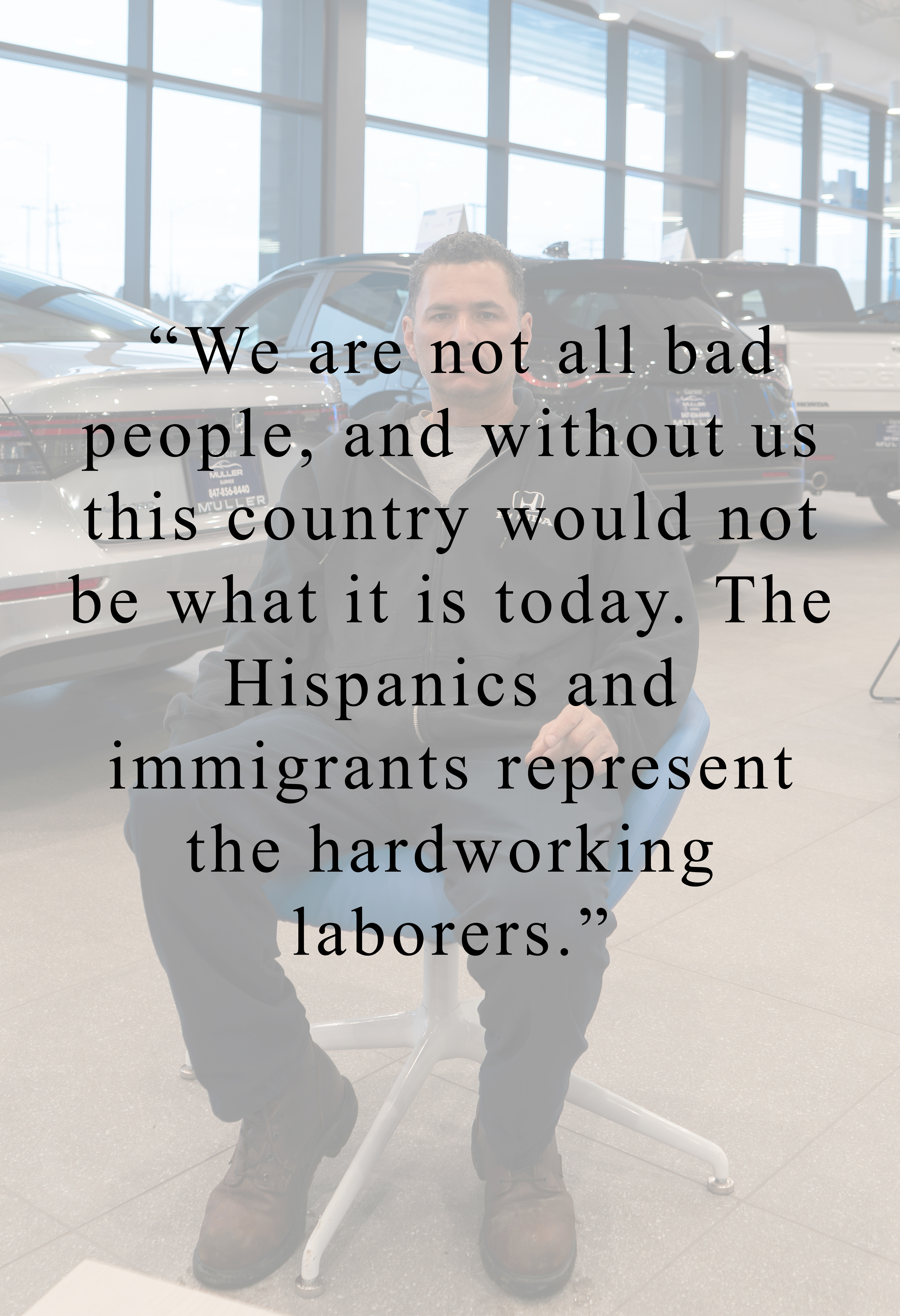
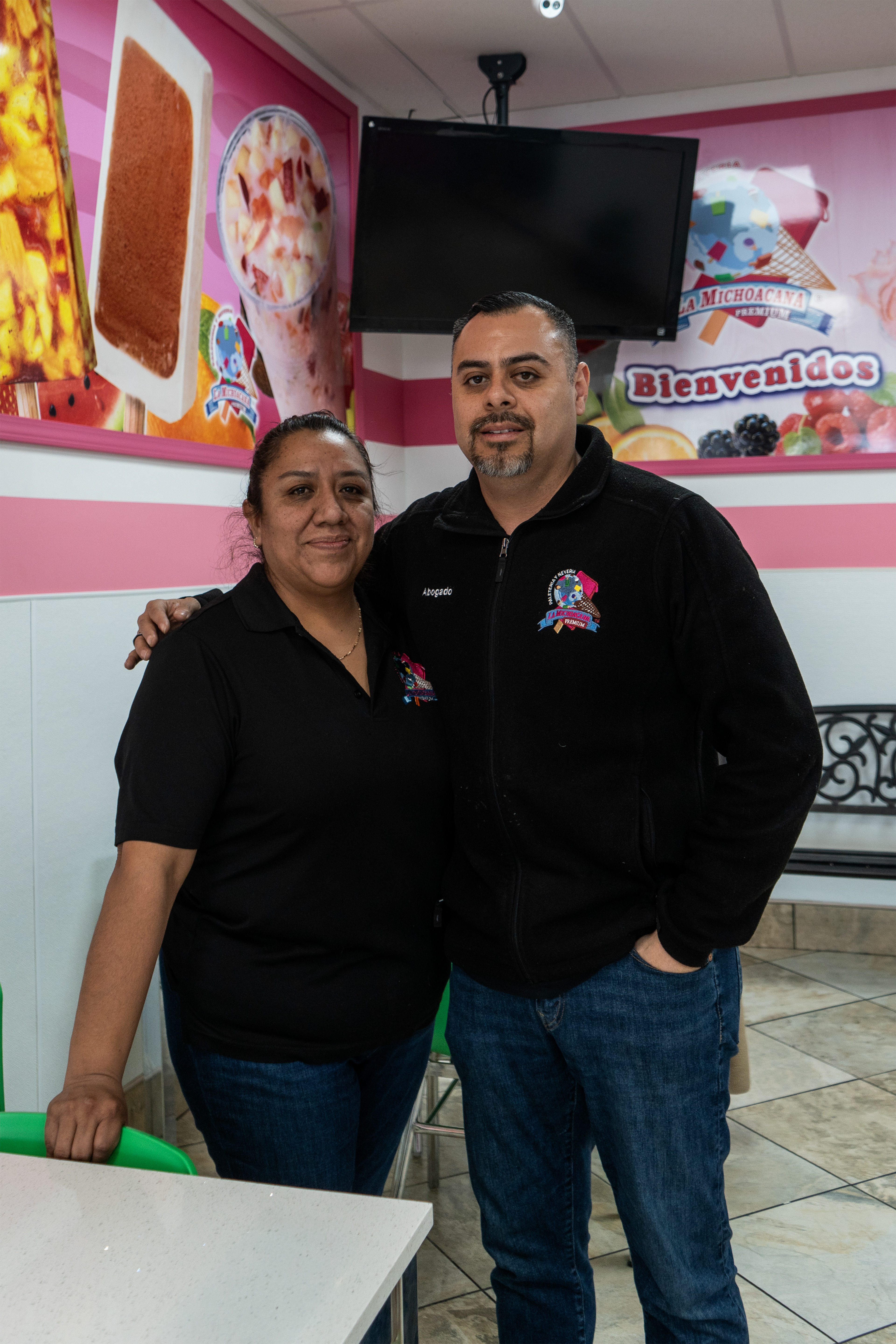
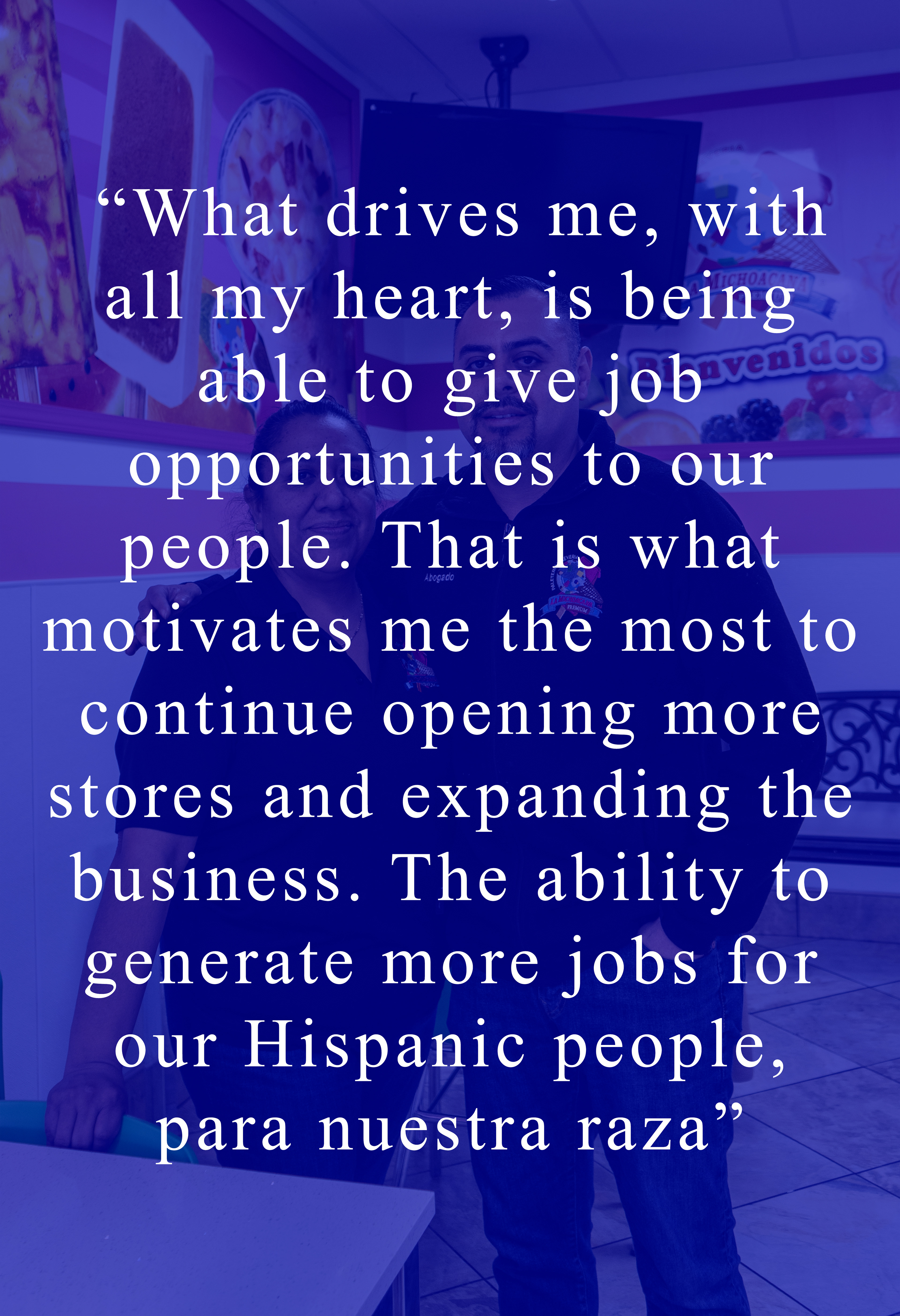
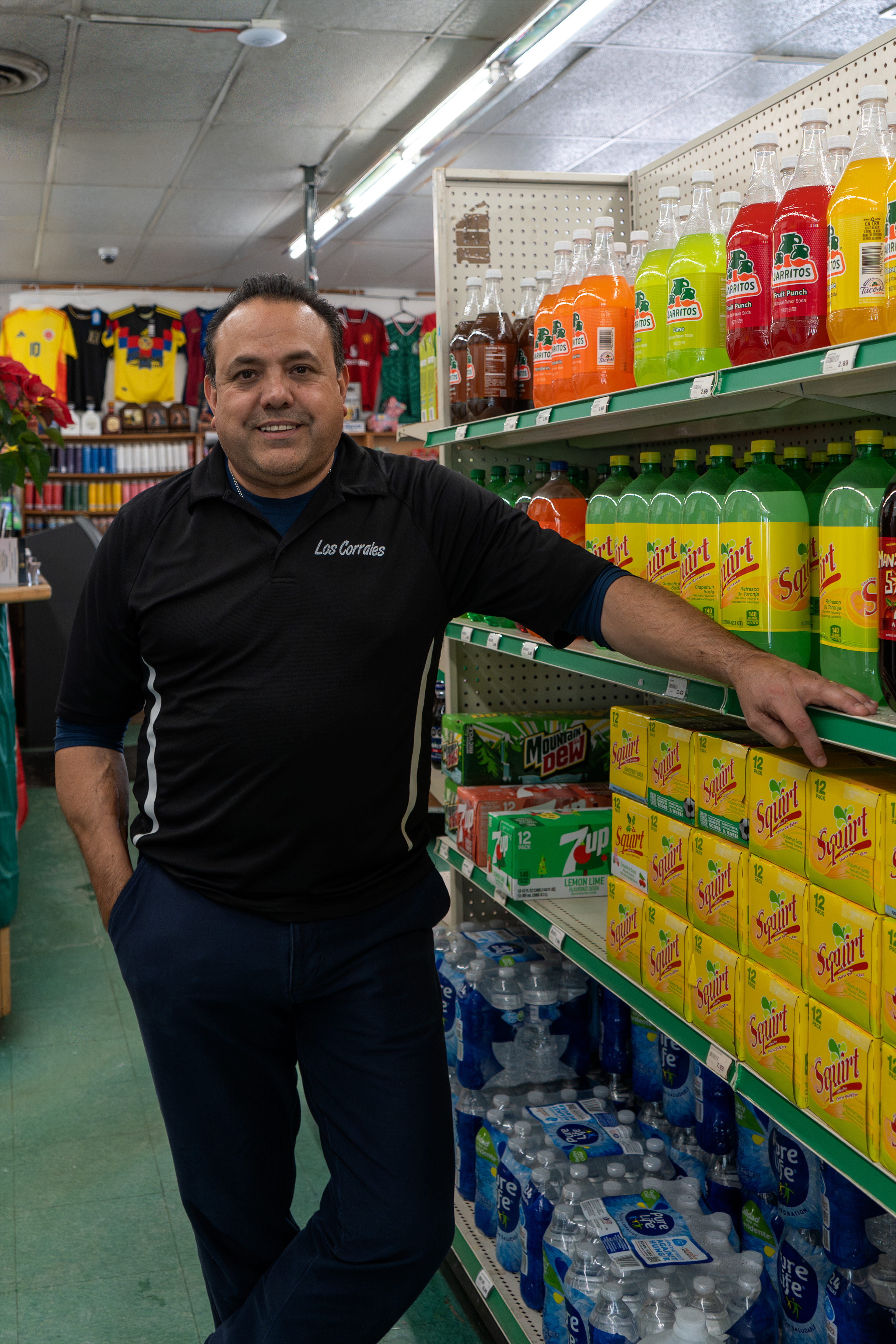
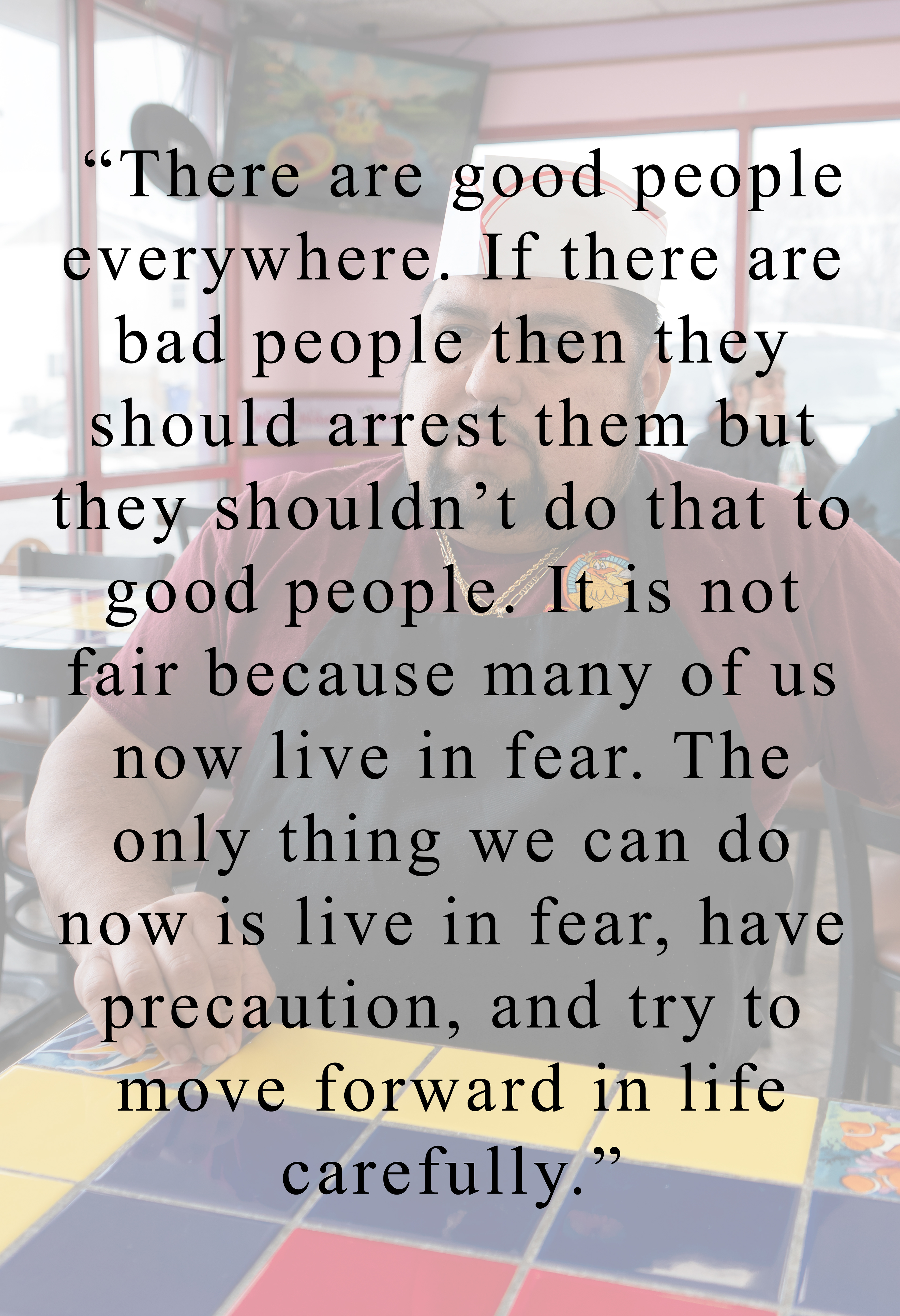
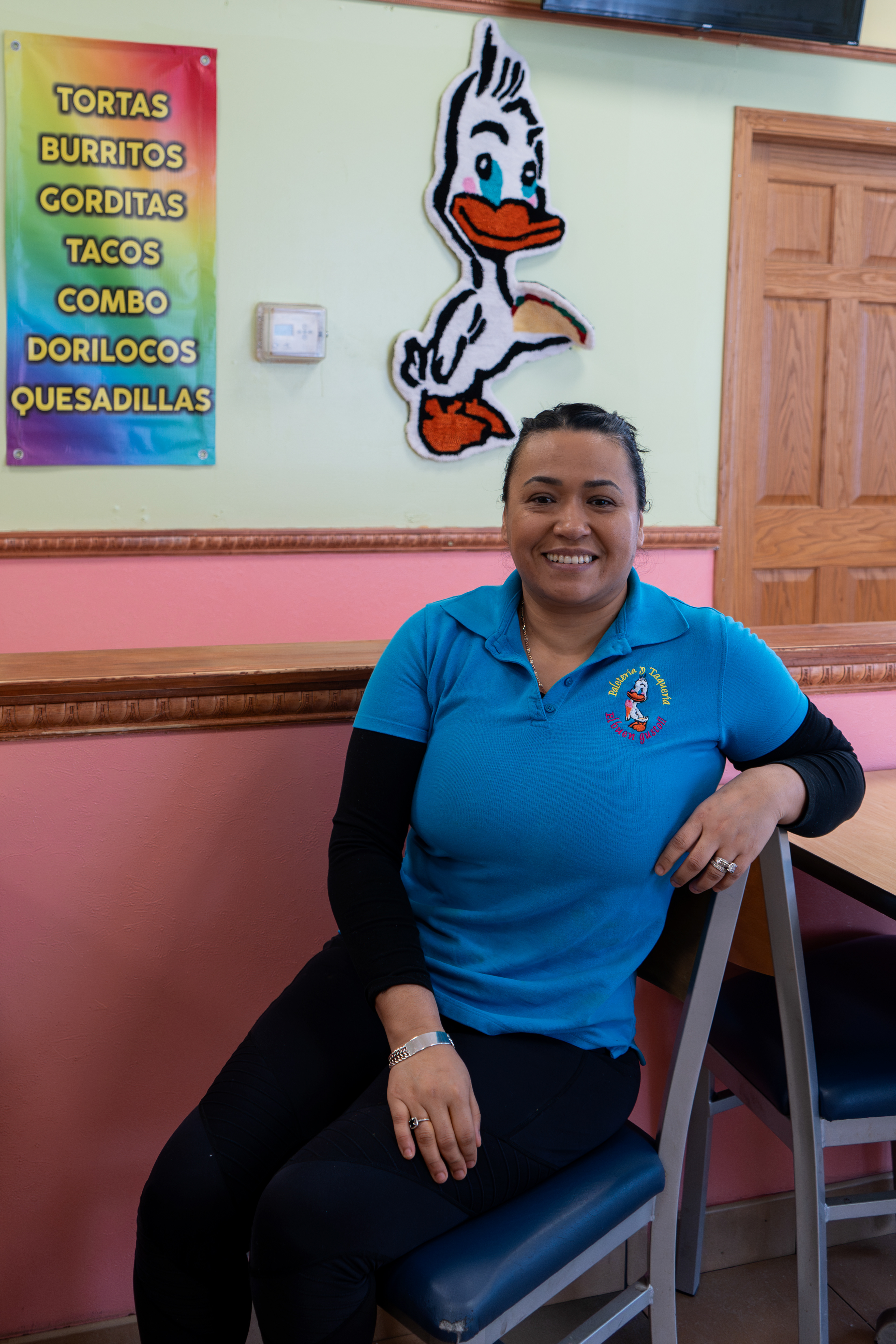
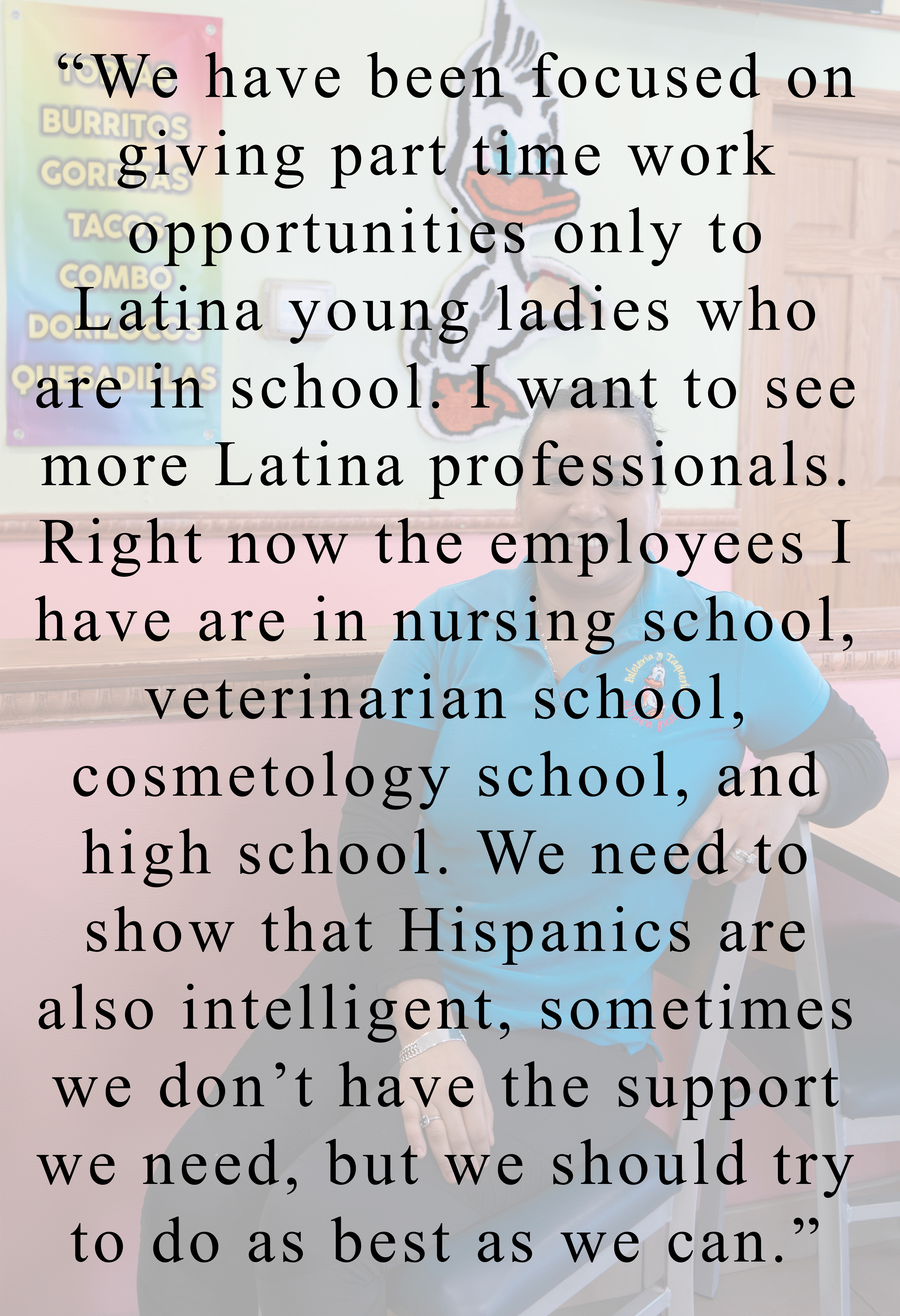
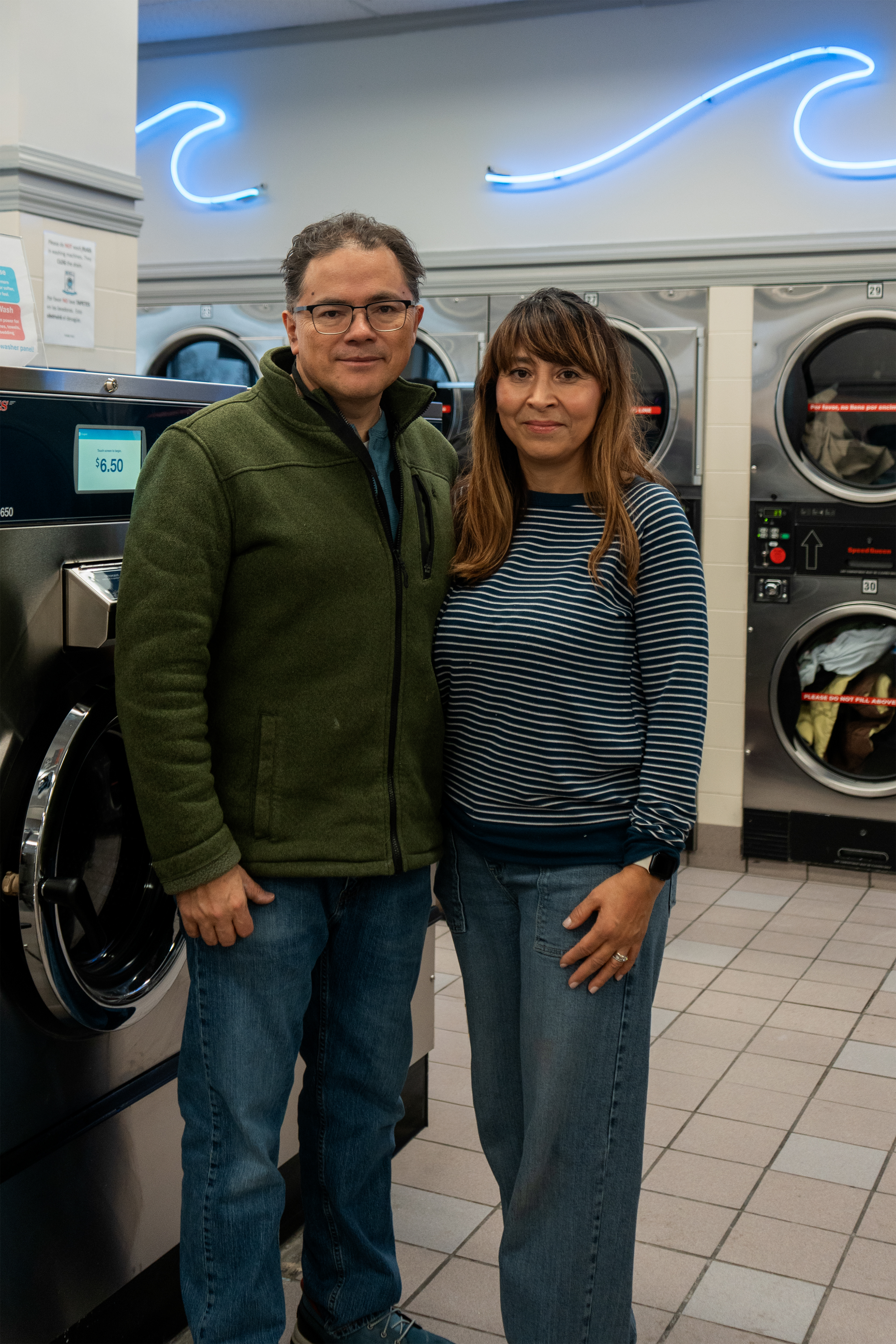
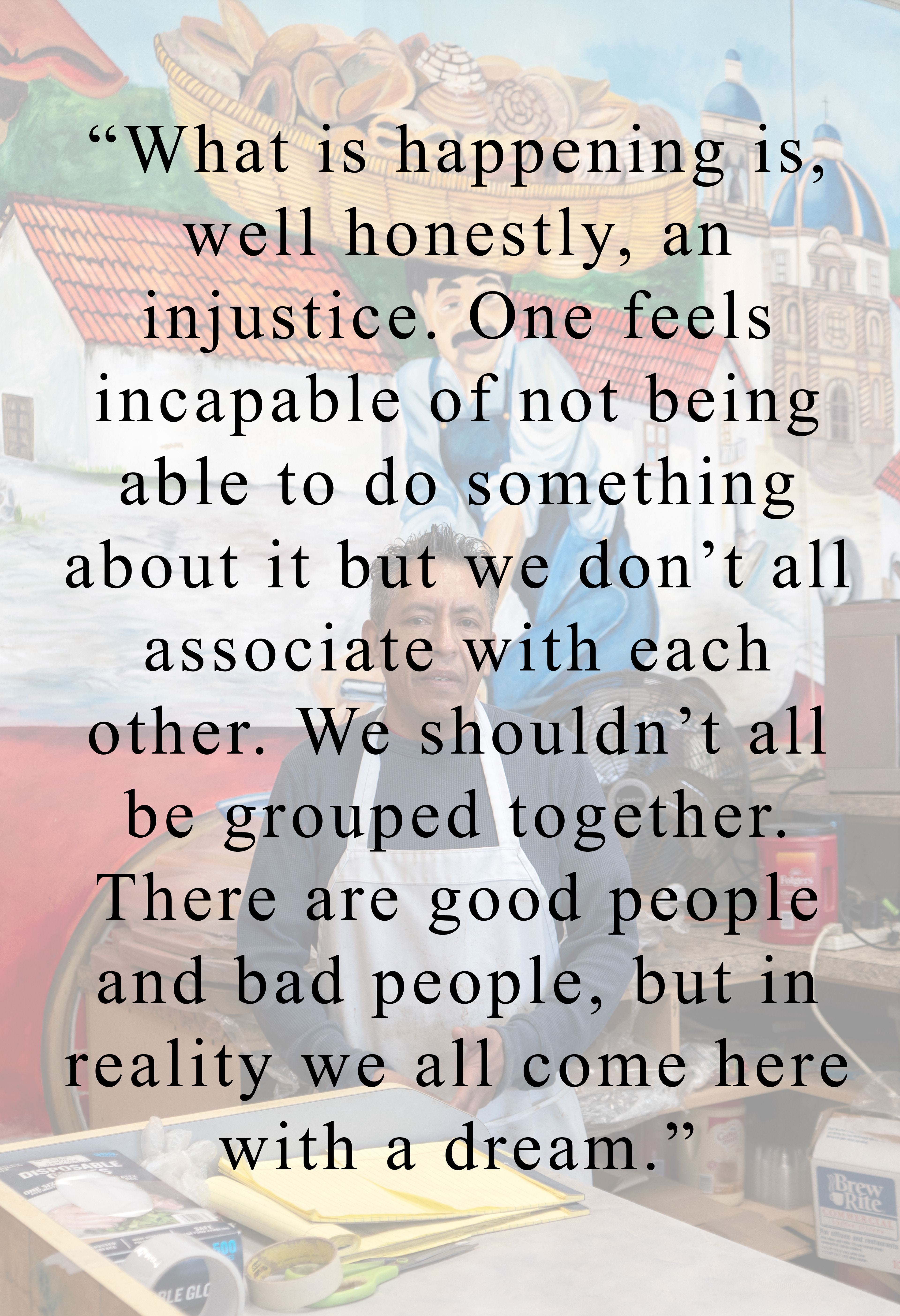
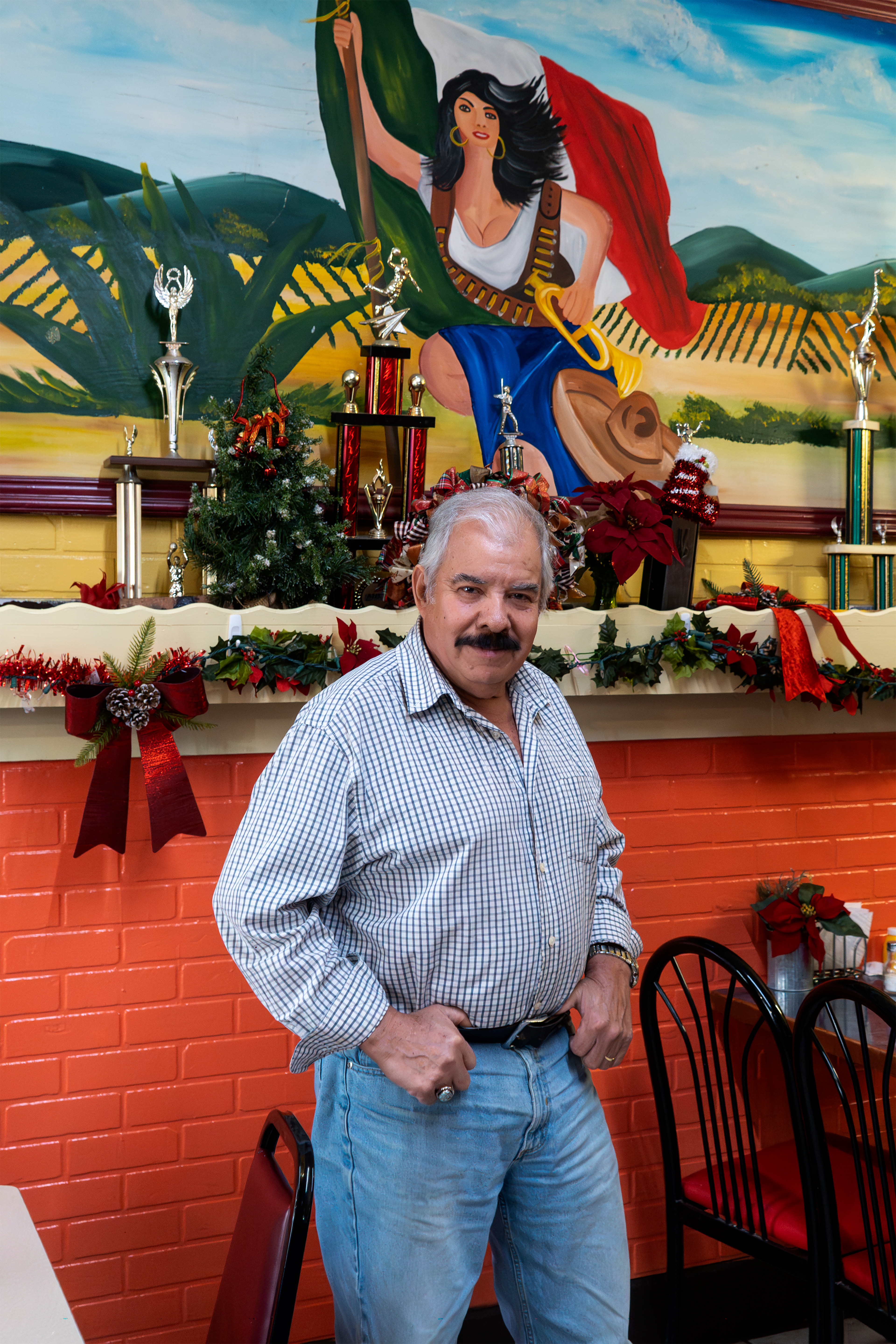
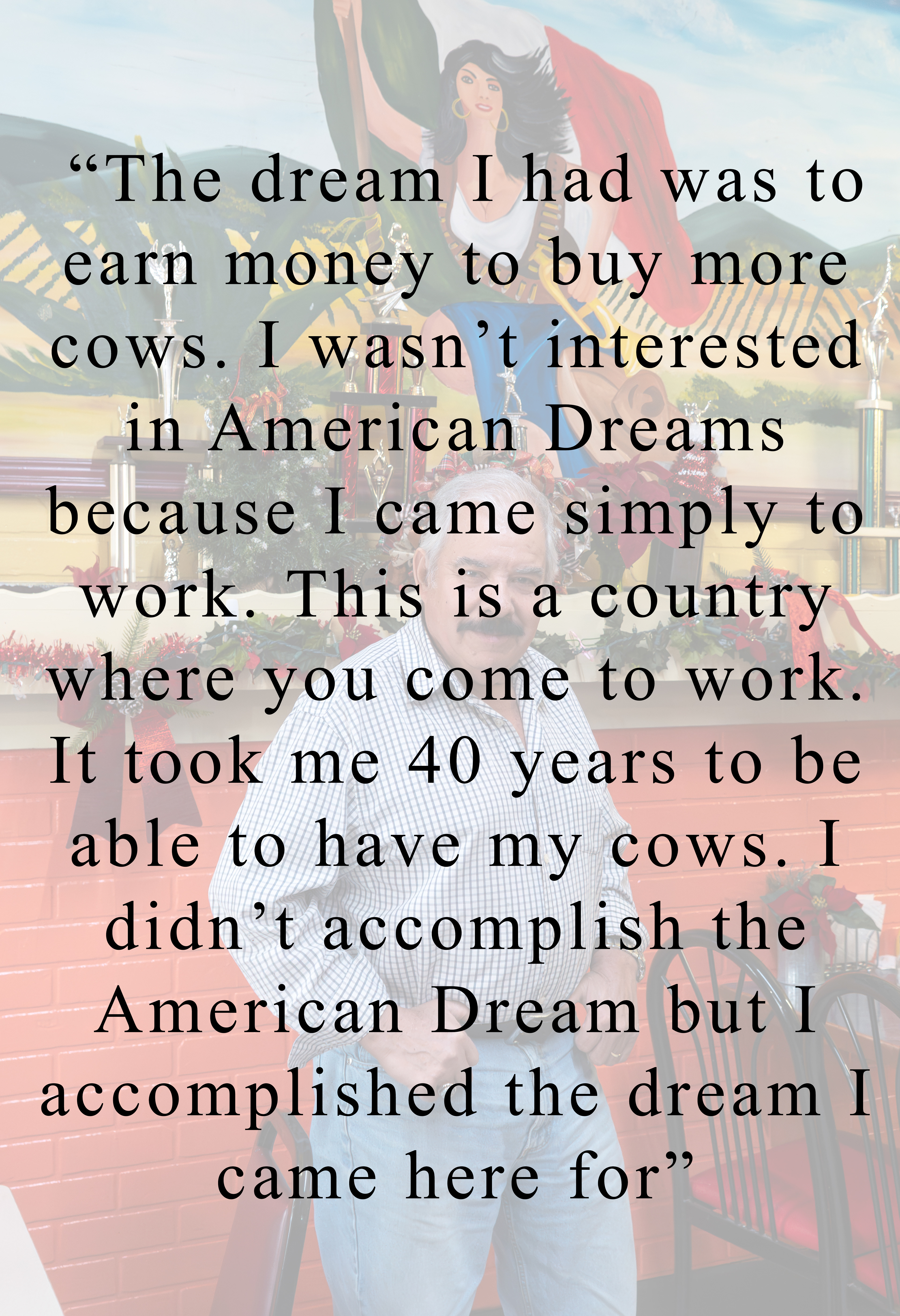
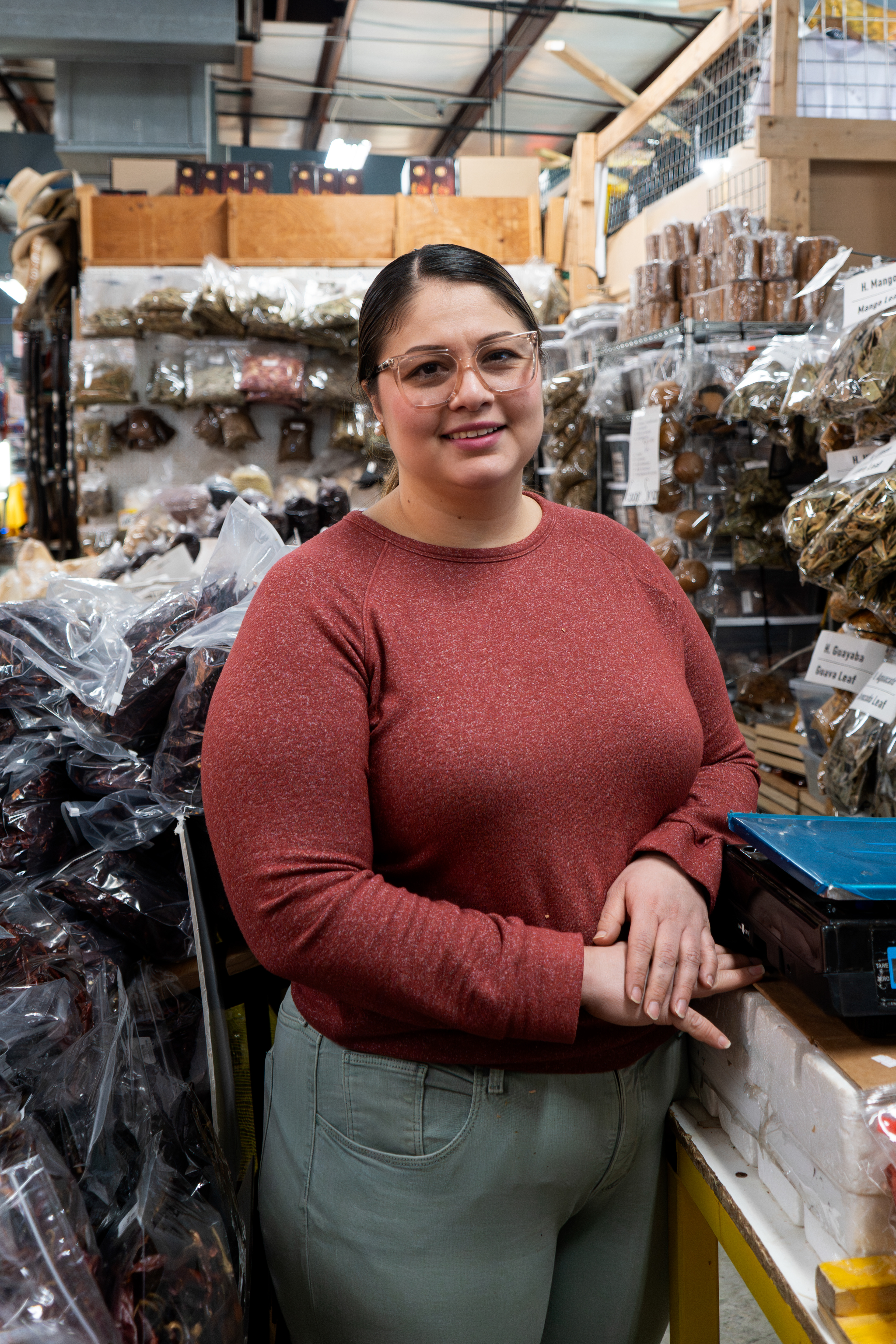
Interview 1
Interviewer: What is your story of how you or your family came to be in the United States, and why did you or your family decide to leave your country?
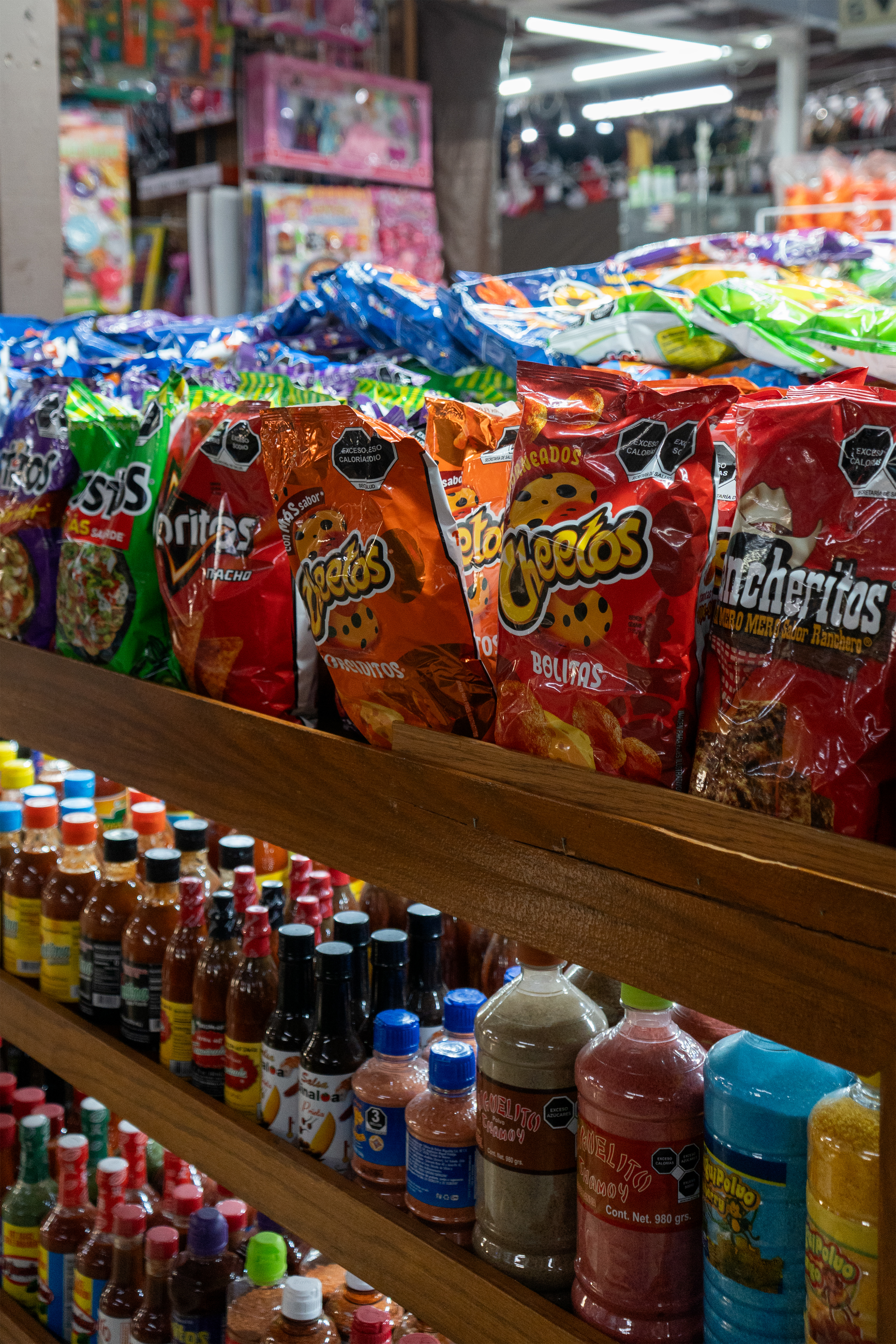
Speaker: So, we’re from Chicago but my dad is from Mexico, and he came to the United States at 15 and he worked as a cook until 18 he had two jobs: cook and dishwasher. We never ever planned to have a business, and it was always him cleaning cooking restaurants, restaurants, dishwasher, restaurants. And so one day the restaurant closed and he had to find a new job and it was a truck driving job and that's where we were involved in Hispanic products and we imported our moles or snacks or chips and he always had a dream of opening up a store but time wasn't always right It was always difficult for us and me going to school was always hard. Passing time, we came to the 7-mile fair, and we just brought two bags of chips and asked Hey, you know what? Can we sell here? And since then, we’ve been here since 2012.
Interviewer: Now that your family has this own business and has accomplished to move forward in life, do you think your dad feels he has succeeded in having what many consider an American Dream, or do you think there are still aspirations for more?
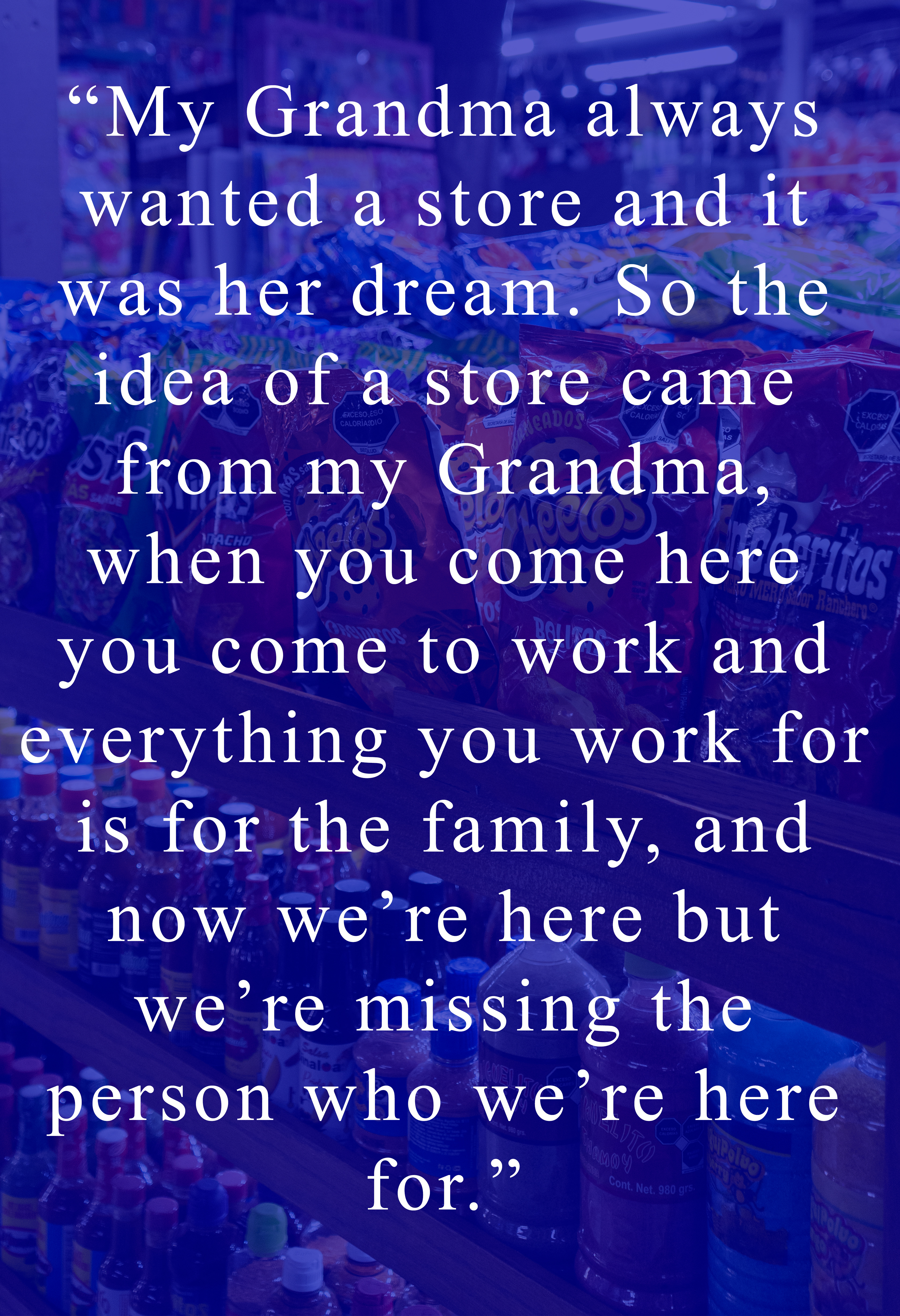
Speaker: We always talk about more in the future because as a businessperson you can't ever stay, but him pursuing his dream, I would say yes, and I would say no. Yes, because when he came here his goal was always to be available to support his parents and sadly, he couldn’t because his mom passed away before he could even accomplish anything. So, it was hard for him to get comfortable with what he could do now the reason why he wanted a store was because of my grandma. My Grandma always wanted a store, and it was her dream. So, the idea of a store came from my grandma, when you come here you come to work and everything you work for is for the family, and now we’re here but we’re missing the person who we’re here for.
Interviewer: During these difficult times in the United States, if you or your dad were able to make your voice be heard, what is something you would want to say to those who judge and wrongfully discriminate against our community in order for them to consider our perspectives?
Speaker: I would say what they always say, you can’t judge a book by its cover. You can’t just judge someone without really knowing who we are. Honestly it can be hard because as much as they hate us we hate them, but all I have to say is, if you eat our food and like our culture then you can’t judge us.
Interview 2
Interviewer: What is your story of how you came to be in the United States?
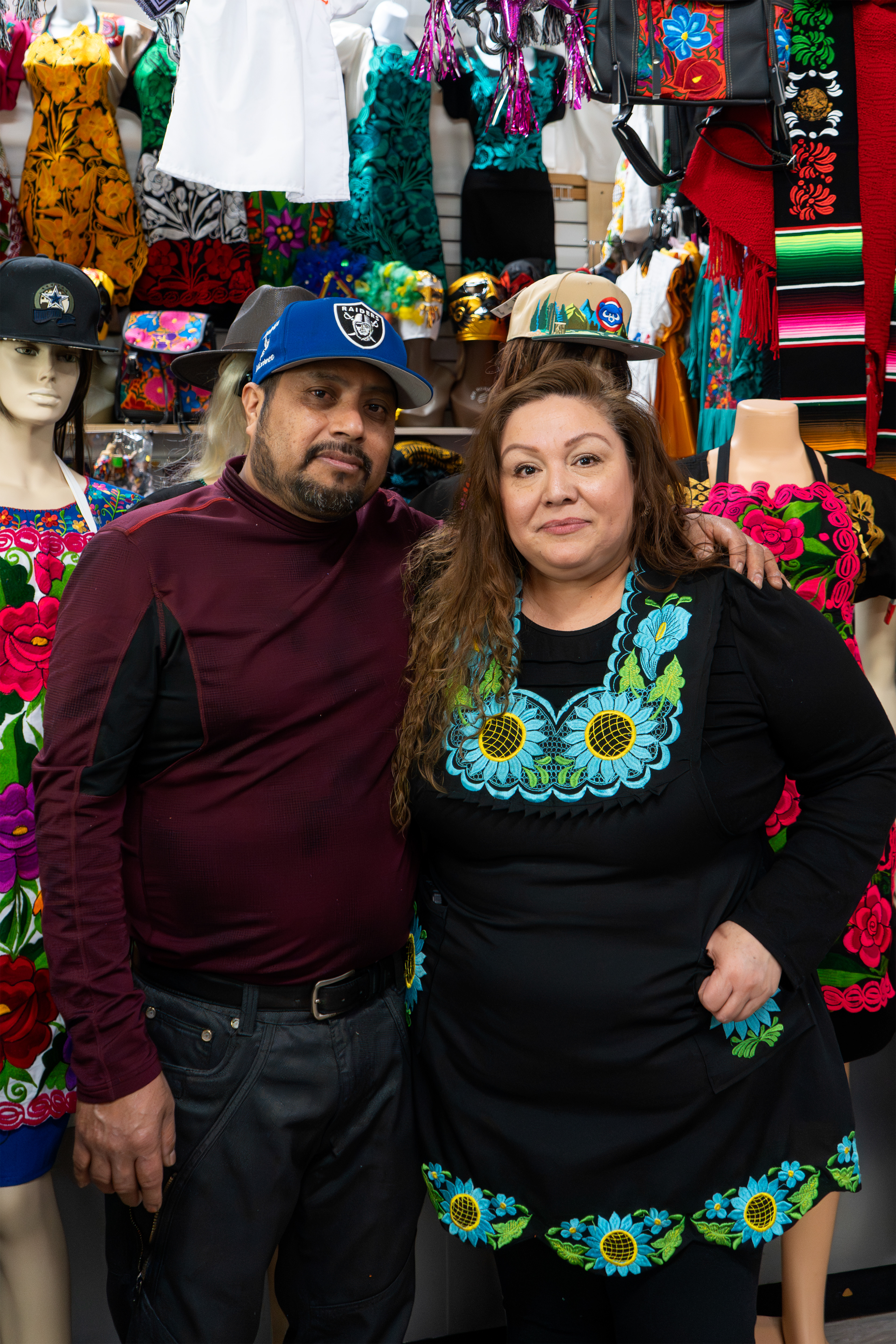
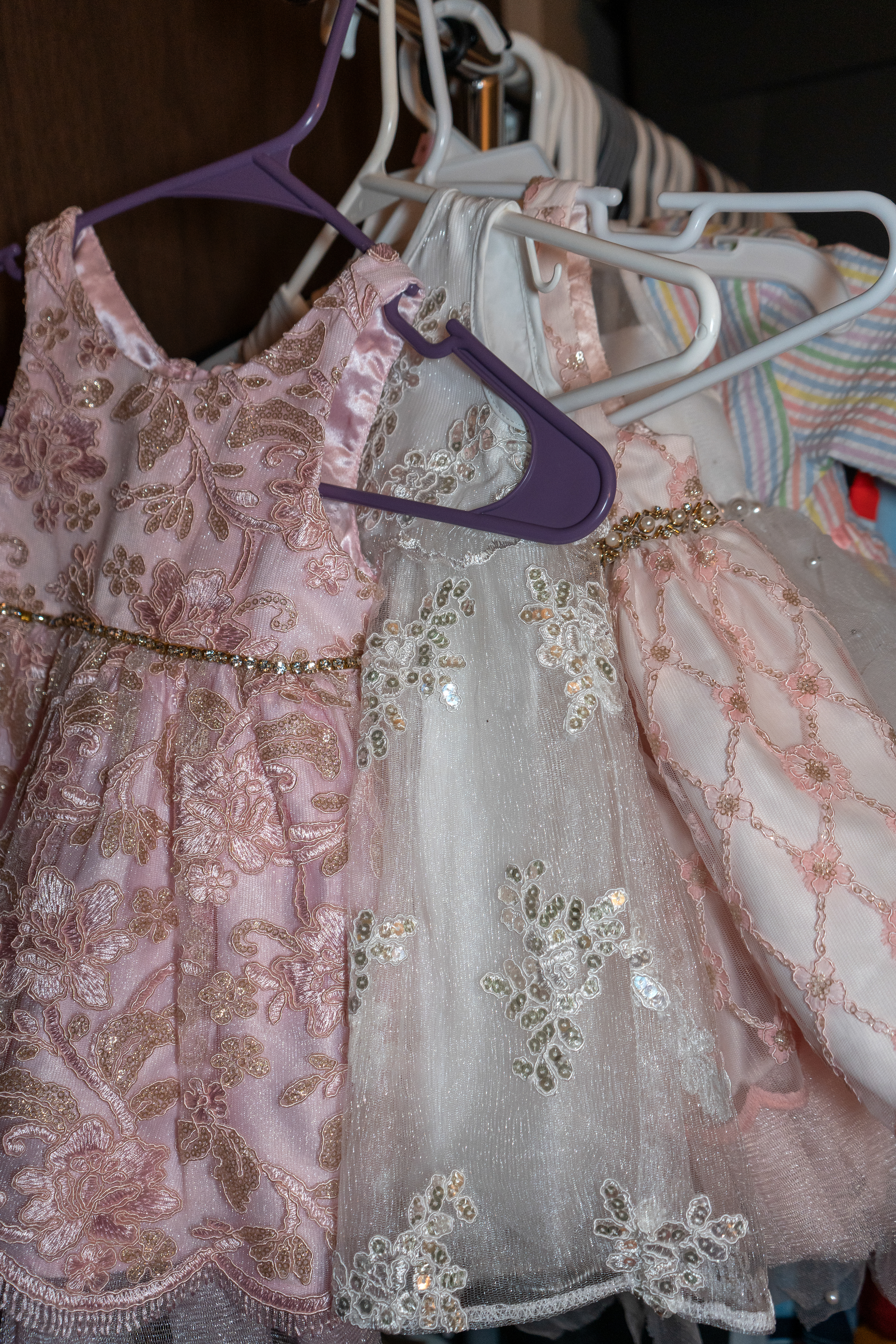
Speaker: I came because I married my husband who was a resident here. He lived here so I came to live with him. That is the main reason I came to be with him. It wasn’t necessarily for an American Dream but thanks to God for the opportunities I have had in life, I came with my daughter. I started working here shortly after arriving in this little area and that is how the business started here.
Interviewer: How did you come about owning your business in selling formal clothing such as dresses?
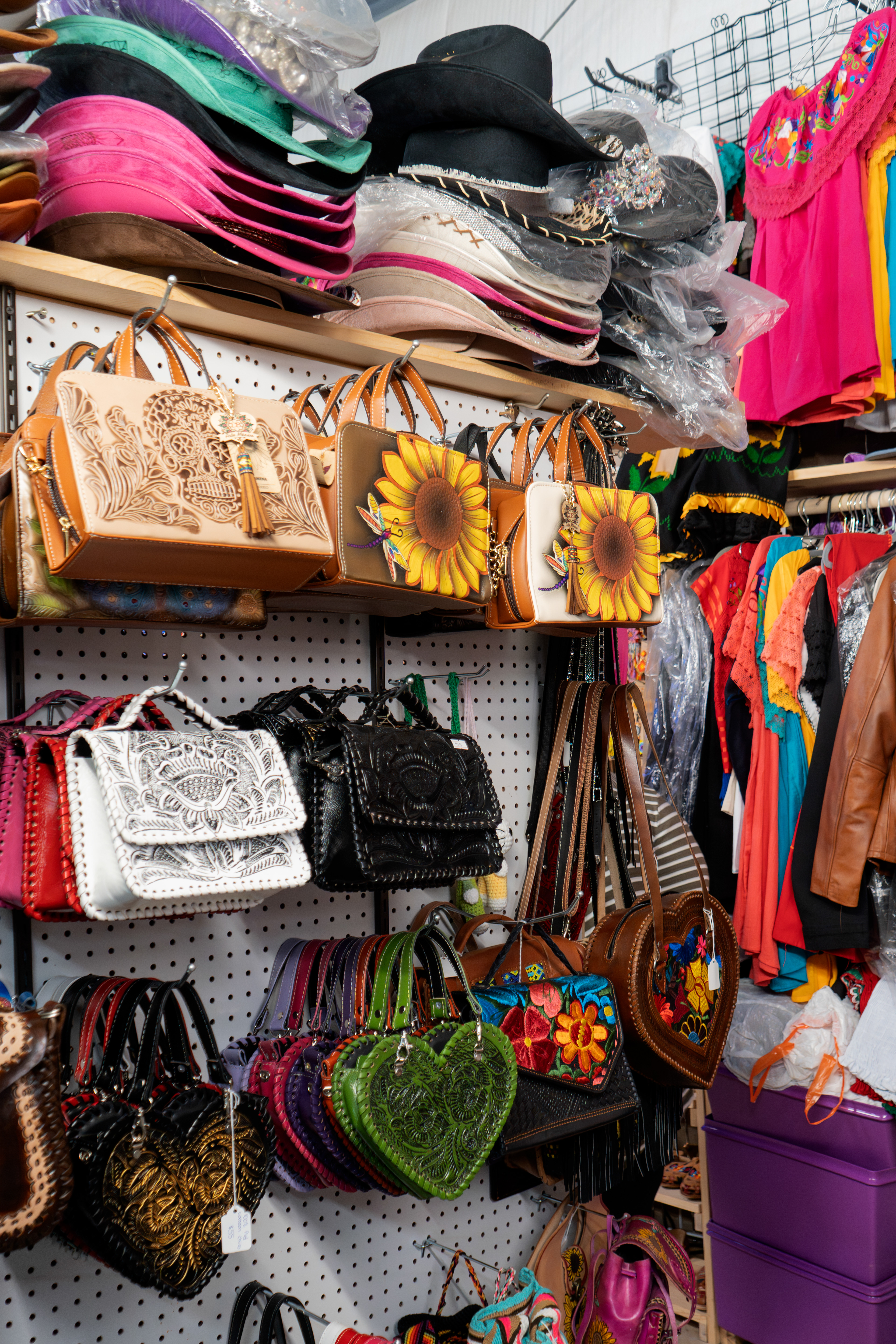
Speaker: Well, when I was a little girl I had the dream of having a business, and I would play pretend of running my own business. I never thought that I would actually have it. When I saw my husband was struggling and needed help at home, I decided that I would see what I could possibly accomplish in order to help. That is how I started here and we have been here 35 years.
Interviewer: Now that you have your own business and have accomplished to help your family move forward in life, do you feel you have succeeded in having what many consider an American Dream? Do you have any more aspirations for the future?
Speaker: Yes, well I am happy with what I have now, thanks to God, but well, I would like to have more. I would like something a little more formal, because here at the 7 mile fair they’re only open on weekends. I’d like something where I can be everyday, like opening up an actual little boutique in a location much different. Being there everyday would be a beautiful thing.
Interviewer: During these difficult times in the United States, if you were able to make your voice be heard, what is something you would want to say to those who judge and wrongfully discriminate against our community in order for them to consider our perspectives?
Speaker: Well I think that the majority of us Hispanics come to this country and being here, maybe many come with a dream, maybe many come like I did, that I came to be with my family, to form my home, and not be alone with just my daughter. Well, like I was saying, I never thought things would be like they are, but when you’re working, and see that the United States is a place that gives you opportunities, or would give opportunities, I’m not sure if it could still be considered the same. It would give opportunities to families to move forward in life so I say we can do it, right? We shouldn’t be scared to do what we want to do or have because we should have faith. So I say, while we have faith, God will help us, and we have to hope that at some point in time all of this will get better. It is scary what’s happening right now to be honest with you. Everything we see on social media and in society. But we can do it, we can move forward. I have experienced things in life that have made me feel like I can’t go on anymore, but if you try to focus on the path you desire, on the goals you want to accomplish, then you can accomplish them.
Interview 3
Interviewer: What is your story of how you came to be in the United States?
Speaker: I’m not sure how to explain it to you, it wasn’t really for necessity, more like um, well from a young age I had the ideas and plans of coming to the United States.
Interviewer: When coming to the United States did you come with hopes of an American Dream?
Speaker: Yes, to do something here, have my own business.
Interviewer: How did you come about working here and owning your business?
Speaker : From the bottom, I started with something small, then investing in my sales and business and that’s how I managed to start doing everything. Letting myself be flexible is how I started. I started this business more like a hobby, because this location is just open on Saturday and Sundays.
Interviewer : Now that you have your own business, do you feel you have succeeded in having what many consider an American Dream? Do you have any more aspirations for the future?
Speaker : There is always the need to be better, as long as you’re happy and have the possibility, we should always do more. When it comes to my dream, well, I’ve worked a lot. Maybe just rest for a while, and then continue with this business, but I would like to get to a point where I can be much more relaxed.
Interviewer : During these difficult times in the United States, if you were able to make your voice be heard, what is something you would want to say to those who judge and wrongfully discriminate against our community in order for them to consider our perspectives?
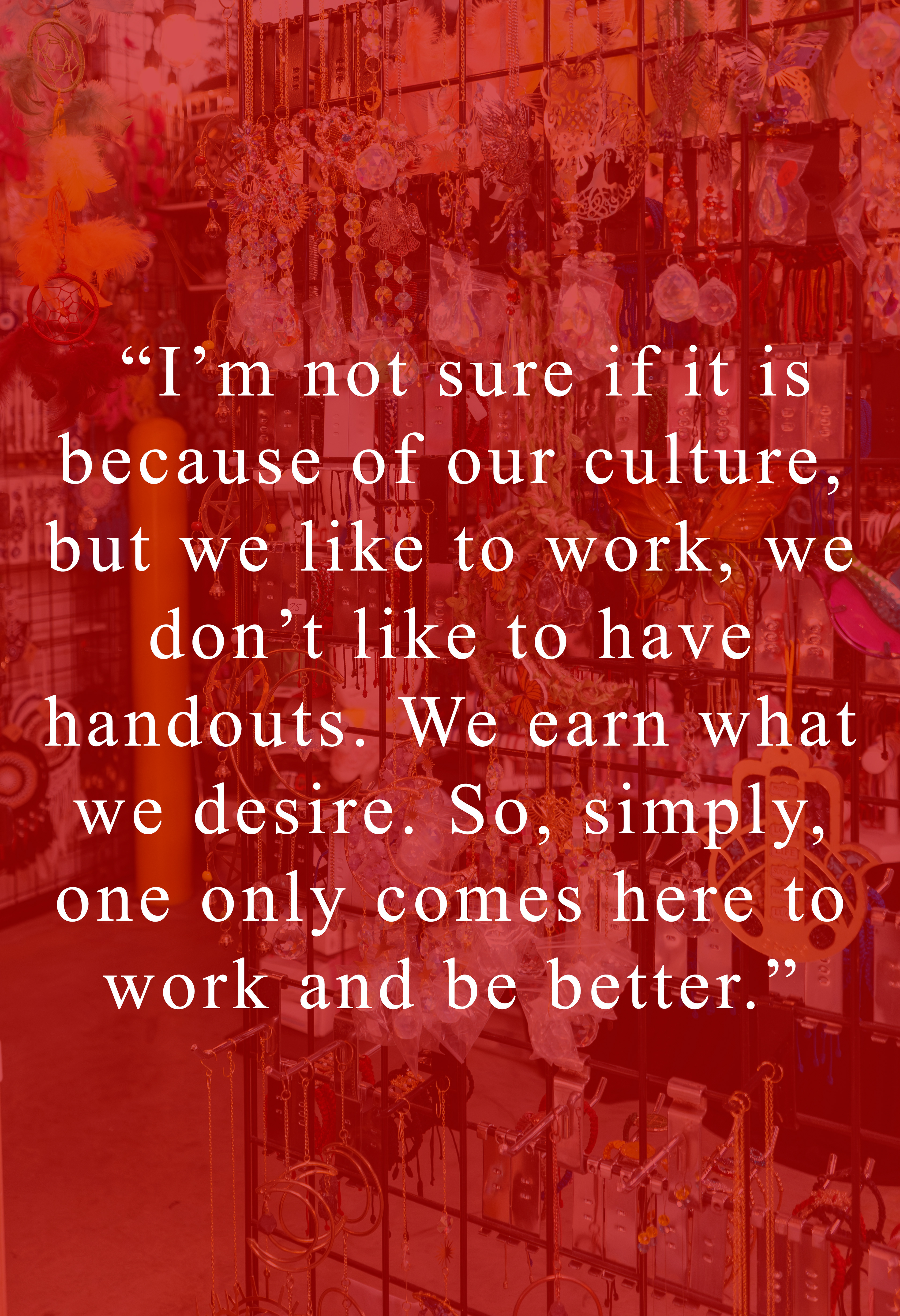
Speaker : We, well I’m not sure if it is because of our culture, but we like to work, we don’t like to have handouts. We earn what we desire. So, simply, one only comes here to work and be better. That's why there is the saying “a Mexican always brings good things”, why? Because we work hard. That’s why we like to live well through hard work. And those who may judge us, I think they’re misinformed and especially now that they’re being influenced by anything.”
Interview 4
Interviewer : What is your story of how you came to be in the United States?
Speaker : I lived in Mexico. My dad had the opportunity to apply for amnesty when President Ronald Regan was in office in 1989. He was granted amnesty and then applied for citizenship and was granted citizenship. After that my dad would come and go from the United States and Mexico and when the opportunity presented itself where he could apply for his family he did and applied for our family to receive citizenship and come to the states as well. We waited for about 10 years in the process to receive our residency and come to the United States. We left Mexico because my father would be here the majority of the time so we decided to leave and join him here. So that is the reason why we came, because in many ways, well there are many more opportunities here, there family was here, and our biggest motivation to come was to keep the family together.
Interviewer : When coming to the United States did you come with hopes of an American Dream?
Speaker : At that time I was in a stage in my life where I didn’t really have an American Dream until I actually arrived here. When I arrived it was when I actually started to look for ways to move forward in life, find my goals, and till this day I keep maintaining myself to new goals.
Interviewer : Did you imagine yourself having your own business and selling clothing and accessories?
Speaker : Not really. Well during the pandemic when Covid happened there was a bit of difficulties in Mexico with people’s businesses and artisans because their sales were suffering and they had no other way to sell because everything was closed so they were struggling. So from there is where the idea of a business came to be. We started to buy things over there and bring it back to help their sales and businesses a little bit. Then after a while we started to properly import their products from Mexico as our suppliers here to be able to start selling those products in our own business.
Interviewer: Now that you have your own business and have accomplished to move forward in life, do you feel you have succeeded in having what many consider an American Dream?
Speaker : I think for how this current situation is right now, you know, having a business means sales will always go up and go down depending also on current political situations. So, for us our sales out of nowhere often go down a lot but, we’re still here with hopes constantly trying harder giving it our all. And well in many ways, I think everything has its own stages in life. Right now, at these points of time, I think we do want more in earnings to accomplish higher goals and accomplish our higher American Dream or actually our Mexican Dream.
Interviewer : What would be those higher aspirations for the future you have?
Speaker : Well, there’s a lot of personal goals we want. For example, we want our children to have a better future, either here or in Mexico, if one day they decide to return to Mexico. Another goal would be for me and my husband to find even better forms of income. We just want to keep working and be able to continue to support ourselves and all other artisans like those who we buy products from in Mexico because they also need help.
Interviewer : During these difficult times in the United States, if you were able to make your voice be heard, what is something you would want to say to those who judge and wrongfully discriminate against our community in order for them to consider our perspectives?
Speaker : Well, if I could have the opportunity, I would, well, I would like to say to not judge all of us because we are not all the same. There are many people who start from zero here, cleaning bathrooms, it’s not a bad job, you know, just working in anything possible. And well, I have been living here in the United States for 26 years. And I had to start everything from zero, without even knowing English, with nothing, but here we are giving it all we have. There are people who are not bad, there are people who just want to work, who have done good things, who do not get into any problems, we actually try to help our communities here, we try to do anything good we can here in the United States to just be able to go forward in life.
Interview 5
Interviewer : What is your story of how you came to be in the United States?
Speaker : My parents brought me here when I was little, I was 10 years old. I studied here, elementary, middle, and high school. My mom came here for a better life and that’s why I came, although I didn’t have much of a choice really. Well now I’ve been here for so long, I’ve been here about 30 years in the United States.
Interviewer : Growing up in the United States did you have hopes of an American Dream?
Speaker : Well I became a citizen when I was 15 years old and I never really thought about returning to Mexico, until I got older I went to Mexico on vacation and I brought back with me some garden fountains and decorations for my house. That is when my business idea started because many people loved the decorations I had in my garden and inside the house so much, they wanted some too. It really just started out of nowhere. I started to bring more items back from Mexico and at first I started in Chicago, in Mexican stores there, we got permission to sell outside their stores and well from there is when we started to grow little by little. More and more people would order and ask for certain things from us. I started to publish on social media what we had to offer and people would reach out.
Interviewer : Although this was never your plan, now that you have your own business and have accomplished to move forward in life, do you feel you have succeeded in having what many consider an American Dream?
Speaker : Yes I think I have accomplished an American Dream because well all of this comes from Mexico and many people come here for those reasons, you know, to work and accomplish their goals. Well now I am starting to accomplish my goals little by little.
Interviewer : During these difficult times in the United States, if you were able to make your voice be heard, what is something you would want to say to those who judge and wrongfully discriminate against our community in order for them to consider our perspectives?
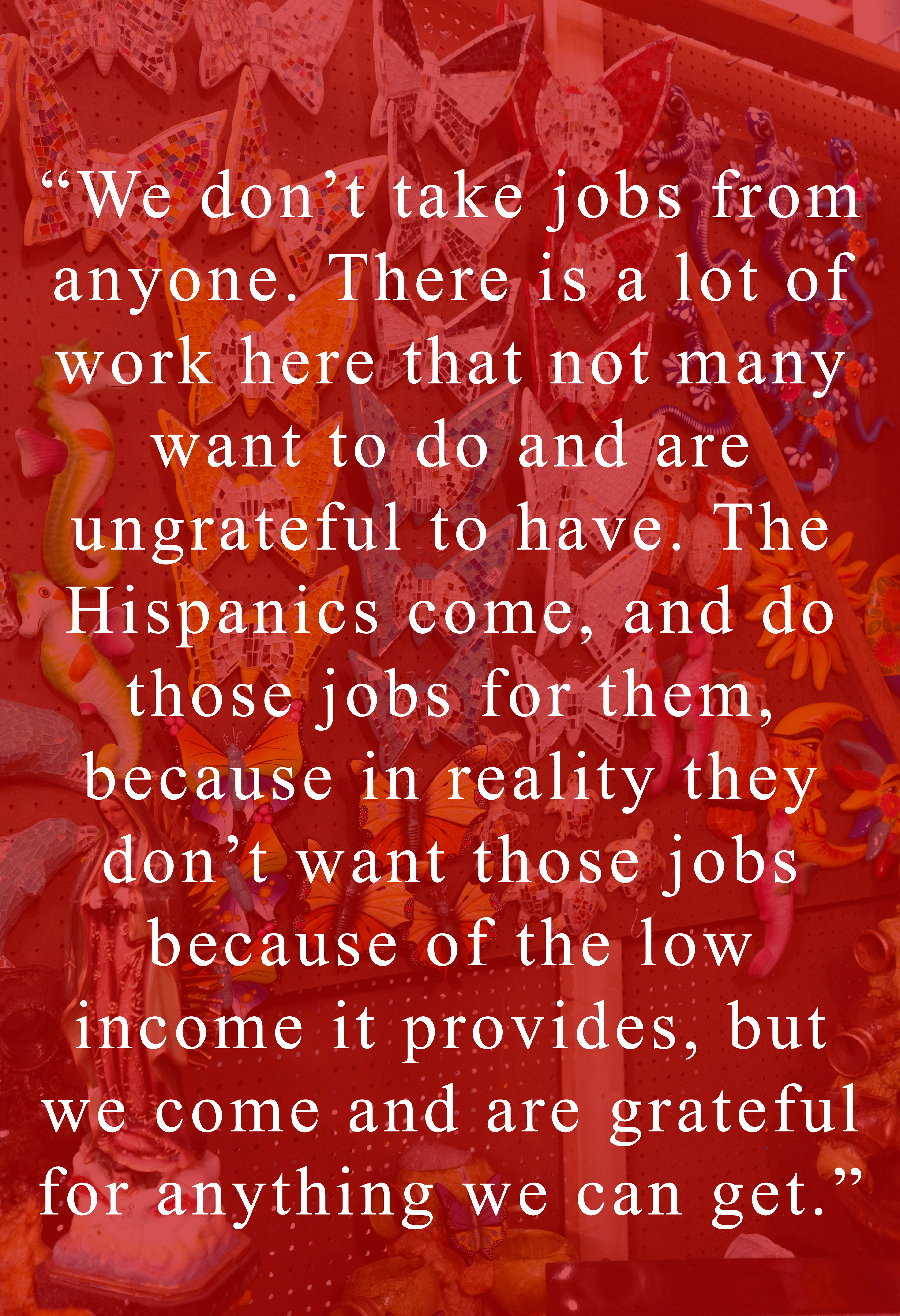
Speaker : Well in reality, as a Hispanic, in general, anyone with Hispanic roots, we do not come to take anyone's job. What we come to do is try to move forward, accomplish our goals, have our own little home, and have our independence. Why? Because we just come to work in anything we can to earn money to support our families. Many people come here for their American Dreams. To accomplish their goals of a better life. We don’t take jobs from anyone. There is a lot of work here that not many want to do and are ungrateful to have, so who comes to do it? The Hispanics come, and do those jobs for them, because in reality they don’t want those jobs because of the low income it provides, but we come and are grateful for anything we can get.
Interview 6
Interviewer : What is your story of how you came to be in the United States?
Speaker : I came to better my lifestyle.
Interviewer : When coming to the United States did you come with hopes of an American Dream?
Speaker : Yes, it was mainly just to have a better life and have a good job.
Interviewer : How did you come about owning your business, did you picture yourself selling clothing?
Speaker : No, I never really thought about these things once I was married, but when I was single I did. I am a daughter of merchants. I came to have this business because I wanted to have my own job. I didn’t really like being an employee, and I wanted to have my own time. You know, like working on my own time, and being able to dedicate time to my children, take them to school, spend time with them, and all of that.
Interviewer : Now that you have your own business and have accomplished to move forward in life, do you feel you have succeeded in having what many consider an American Dream? Do you have any more aspirations for the future?
Speaker : No, I just simply want to survive I think. I am happy with how far I have come in life because in certain ways I helped my children move forward in life, to graduate, and I have been able to work on my own behalf. I think I would just want my children to be good citizens, good parents to their families. That's all, because it really depends on everyone’s own preferences. I can’t wish anymore for them because, for example, I personally would’ve liked it if my children would’ve liked the business but they don’t. I have 7 children and out of all 7 not one liked the idea of running a business.
Interviewer : During these difficult times in the United States, if you were able to make your voice be heard, what is something you would want to say to those who judge and wrongfully discriminate against our community in order for them to consider our perspectives?
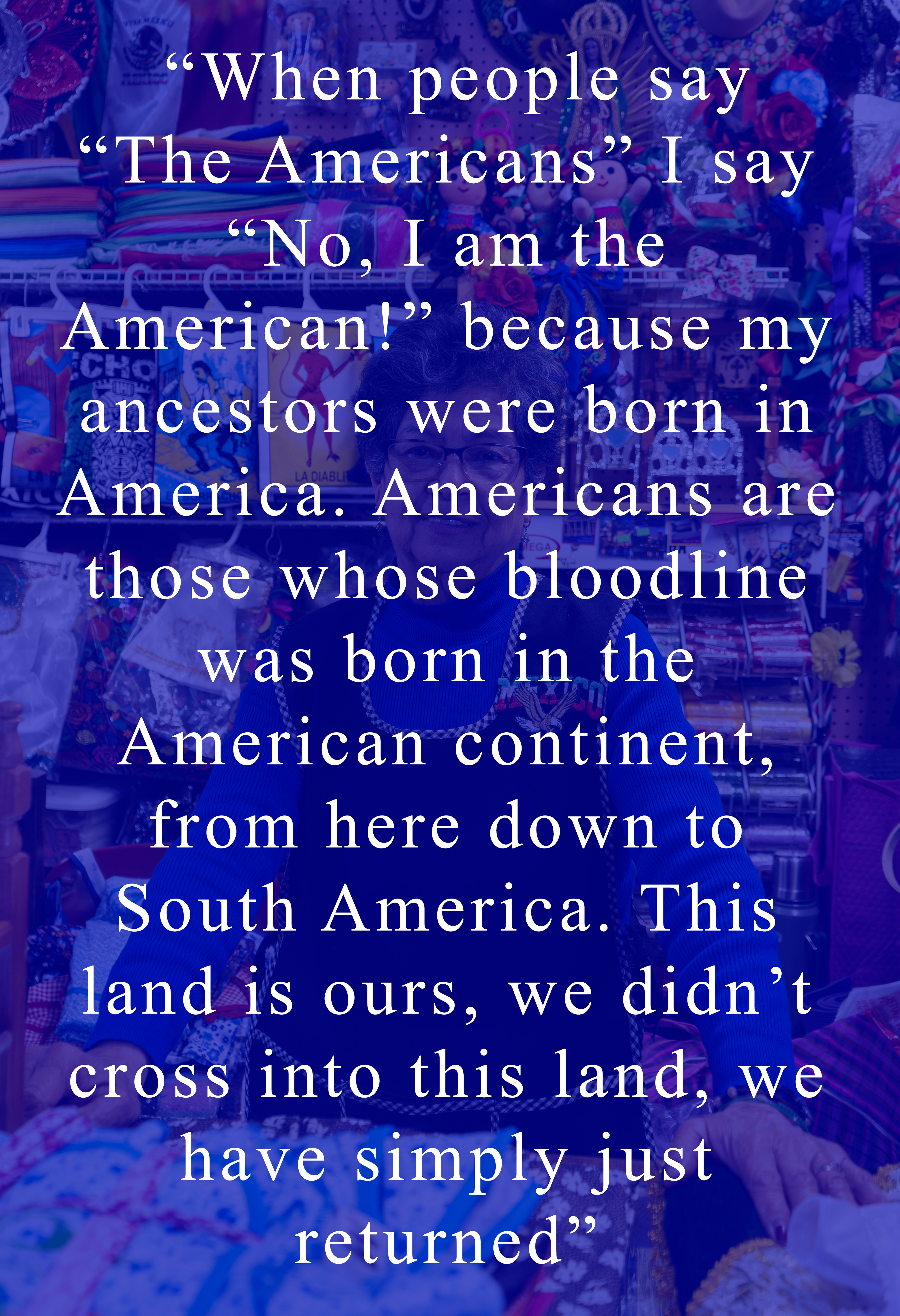
Speaker : I would simply say that we are people who come to this country to work, and we like to work, to earn our bread, with our own struggle. The majority of us have these dreams and wishes to come work here, and in reality we don’t come here to take work from anyone else. When we come to the United States we are not coming to a strange place. This place belonged to us, we didn’t cross, they crossed us. They’re the ones who came here, we were already here. When people say “The Americans” I say “No, I am the American!” because my ancestors were born in America. Those who call themselves American are not American, they’re European, their ancestors are from other places. Americans are those whose bloodline was born in the American continent, from here down to South America. This land is ours, we didn’t cross into this land, we have simply just returned”
Interview 7
Interviewer : What is your story of how you came to be in the United States?
Speaker : I am from Michoacán, from a little pueblo there called Tacáscuro. I left there to come to the United States in 1999. Thanks to my cousin who is founder and owner of La Michocana Premium, he invited me and my brother to work with him, and this enterprise started in 2008 in Aurora, Illinois. That is where the first store opened. After that we began to open many more stores and came here to Waukegan, IL in 2011 and made it to Kenosha, WI in 2015.
Interviewer : Why did you and your family decide to leave your country?
Speaker : Well you start to grow up and the necessity to provide for your family begins. In my case, I didn’t want to study. My father asked me if I wanted to continue to study and well school was not for me to be honest. I decided to dedicate myself to helping my father on the ranch with the cows and everything else there. I started to grow up and started to realize how much necessity there was around the house and that's when I decided to migrate to the United States with hopes of being able to help my father, mother, and the whole family.
Interviewer : When coming to the United States did you come with hopes of an American Dream?
Speaker : To be honest when I arrived in the United States my only American dream was to help my parents. Afterwards it began to be wanting to form something, or have something. This business of an ice cream shop was thanks to my cousin Marco Andrade, he is the one who started this enterprise. He started working when he was a little boy in Mexico. His father, my uncle, was the founder of La Michocana in Michoacán, Mexico in 1945. When he decided to come here he worked in factories, construction, and other common jobs. He came to realize, “well, if I know how to make all these products then why do I not have my own business here yet?” That’s how he came to make the first one in Aurora. He invited us to La Michocana Premium in 2011 and since then we helped him in his first store in Aurora. We wanted to take advantage of the opportunity and keep growing. We started with two employees. When the first store opened, between my brother and I, I said one day we would have more workers and we’re going to keep growing. Then we kept growing and opened locations here in Waukegan, Round Lake, Kenosha, and Milwaukee. Thanks to God we now have over 150 employees. Afterwards, we had another cousin join us and then more family and that's when the enterprise started growing more. We established respect. We each have our areas and we can’t cross into each other's zones. Then La Michocana became a franchise and we started selling shares to other people and that is how we grew. We are now in 8 states.
Interviewer : Now that you have this business, which has been an incredible success, and have accomplished to move forward in life, do you feel you have succeeded in having what many consider an American Dream?
Speaker : Well, to be honest, I am very grateful for this company, what I have, and everything we have built. First and foremost, I am the most grateful to God, and over everything else, my team here in Premium. Here with me is one of my team members, Yolanda. She has been with me since I started since 2011 till now 2026. It is a huge effort when you grow thanks to a team that surrounds you. From the enterprise, from the office, from your right hand person, from the CEO, from everyone. We’re all part of a puzzle you could say, that keeps growing as you build, and we still have so much more room to grow.
Interviewer : What would be those aspirations for growth or the future?
Speaker : What drives me, with all my heart, is being able to give job opportunities to our people. That is what motivates me the most to continue opening more stores and expanding the business. The ability to generate more jobs for our Hispanic people, for our race. Also, just continuing to grow, and having more stores in more states.
Interviewer : During these difficult times in the United States, if you were able to make your voice be heard, what is something you would want to say to those who judge and wrongfully discriminate against our community in order for them to consider our perspectives?
Speaker : Like everything, it is always … Hispanics will always be judged as bad people, unfortunately, due to a few people, we all lose. The truth, honestly, if it wasn’t for the Hispanics, this country would not be what it is today. Because we are hardworking people, who pick up anything that comes our way, we are, well fighters. It’s proven right here by a serving man that founded an enterprise and continues to grow it.
Speaker 2 : The American Dream is to come build something better. Here is the owner who we are very happy knowing there are people like him who will provide us with jobs. We are not bad people, we are working people. We come with a dream and we come to work clean. We do not deserve those titles they give us. We want a better life for our children and the community.
Speaker : Anything is possible in life. There is everything, good days, bad days, days that you don’t even want to get out of bed, and even worse when you experience a strong problem , but I’ve always said “put God in everything”. With him, everything is possible. You simply just have to put effort into a project and just do it. We tend to victimize ourselves saying we don’t have money, lack resources, and the truth is they’re just excuses. One who wants to, will. It’s been proven with myself and like I said before with the whole team of La Michocana Premium, who have supported me since the beginning. Here with Yola, my brother, who has always been with me in good and bad times, because if I said there are only good times I’d be lying. In this business there are good and bad. You have to know how to overcome problems, continue the process, and continue to grow.
Speaker 2 : Like I said before, we are very grateful for people who exist that want to give us an opportunity, besides being employees, to learn things and grow with them. To learn customer service and have opportunities to become leaders. That is something very beautiful and gratifying to be recognized in a job. To know our products are 100% natural and they don’t have artificial flavoring, it is natural fruit, to make what we do here. So we provide a great flavor and we’re able to sell proudly, and work proudly.
Interview 8
Interviewer : What is your story of how you came to be in the United States?
Speaker : I came here as a tourist honestly I didn’t come running from anything. I wanted to be here because my family was here. I studied at a university in Mexico. I graduated with a degree for International Relations and well yes I had a dream of coming here. Actually, originally I wanted to be a translator for courthouses, but I did find myself with a lot of obstacles. After arriving I also really liked the system of security here. They way a man was more focused on his family here than in Mexico. I told myself I wanted to build a family here, I wanted the same, a family man, and healthy children. Arriving here meant living in security in liberty, mainly because you didn’t have to be scared walking on the streets or being out late and that’s something I really liked.
Interviewer : When coming to the United States did you come with hopes of an American Dream besides the dream of just being here?
Speaker : Besides my family, yes. Honestly, because of the status of being an immigrant at one point I couldn’t work in what I wanted too. I would’ve liked to have worked in what I studied but I never accomplished it. Maybe I didn’t try hard enough but I really would’ve liked to work in the field of my degree because I studied for 5 years in college and being here I didn’t do it. But it did benefit me a lot arriving here and knowing English because it opened many doors for me. But afterwards my dream became having a family.
Interviewer : Now that you have a good title and position at this job and have accomplished to move forward in life, do you feel you have succeeded in having what many consider an American Dream?
Speaker : I think that I have had the opportunity to live amongst people from all cultures and backgrounds, and countries which is something that I didn’t have in Mexico. In Mexico I was really in my own little rose colored bubble. My friends were people from college also and my whole community was only people who had higher education. So I would never really associate myself with other people and I would sometimes even feel uncomfortable. However, this country allowed me to really change my perspectives. I get along with everyone now I can talk to everyone, even people who approach me here at work a bit aggressively. I can maintain my calm and speak to them well. I think I have accomplished more than an American Dream because being here has changed myself and my life completely. Personally I have accomplished a dream of being able to expand myself.
Interviewer : How did you come about working here and climbing the ladder to your current position?
Speaker : I started like anyone else, with the necessity of an income. My husband had lost his job and we had two young sons but luckily they were in school already. One was in kindergarten and the other in first grade. Well the necessity wasn’t getting us anywhere, we had our house already so it was the question of how are we going to pay for this house and everything else. We have never been the type of people to ask for anything from anyone so I took it upon myself to come here and apply, and I got hired. The person who was hiring at the time, I told him that I had never worked before, I never had a job, but I wanted to work in customer service and attend to people. He asked if I spoke English and I said yes. He asked if I was sure and didn’t believe me, but I told him I was very sure. I have an accent but I can still be understood and I told him I studied English in my country in Mexico because in order to graduate and complete my thesis I needed to either speak English or French and I had chosen English. He said he would give me a chance but if he didn’t see me speaking proper English he would send me to the kitchen and I accepted. After a month of being here he asked if I wanted to be a crew trainer and I accepted and since I followed instructions properly and would correct others, in less than a year they promoted me to manager, and right after a year I was promoted to assistant manager. After that, I just kept going up. I did want to keep going up and I had the opportunities because in this company there are many opportunities but honestly I wanted to work in a social job with people. Even in Mexico I liked being involved in social causes. I have not experienced discrimination myself but I have seen it done many times, especially to Latino people. So I really would like to be part of a project where there is equality and show people that stereotypes are not good, and we can break many of them. I have seen discrimination be done many times when people make fun of employees for not being able to properly speak English, or when people often ask me why I have workers here who don’t speak English. I tell them, “to make your sandwich they don’t need to speak english. They just need to be clean, follow instructions, and be respectful, and that’s what they do”. I also tell them that there are many people who apply here who speak English but show up and don’t even want to work. They show up for one day and say it’s too much work for them and leave. I can’t wait around for them to decide whether they want to work or not. If I waited this business would have been shut down already. The people who show up everyday and show up to actually work don’t speak English. So little by little we’ve been putting those people in other positions where we teach them the basics of English and they do their job and attend to customers very well.
Interviewer : Speaking of those topics, during these difficult times in the United States, if you were able to make your voice be heard, what is something you would want to say to those who judge and wrongfully discriminate against our community in order for them to consider our perspectives?
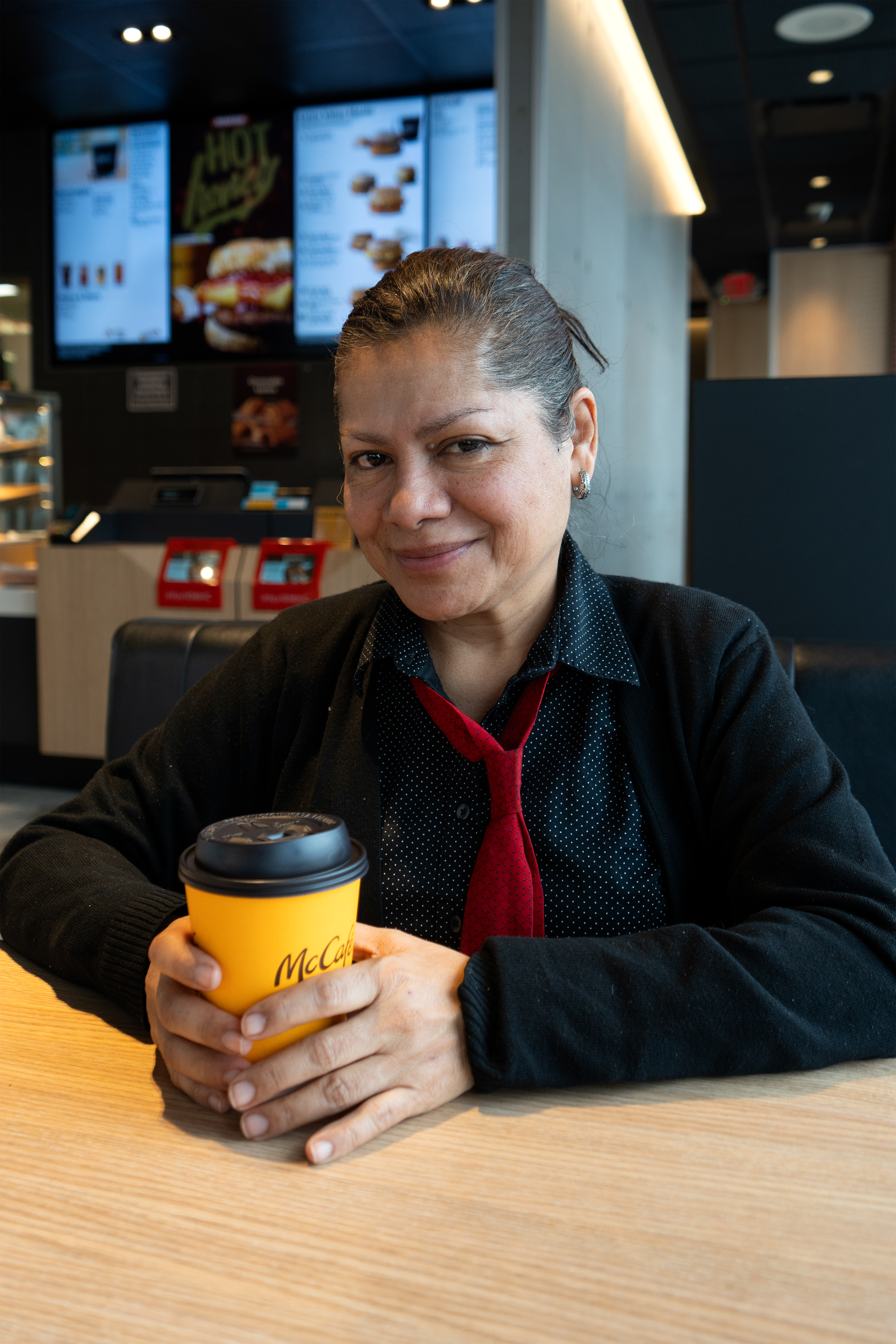
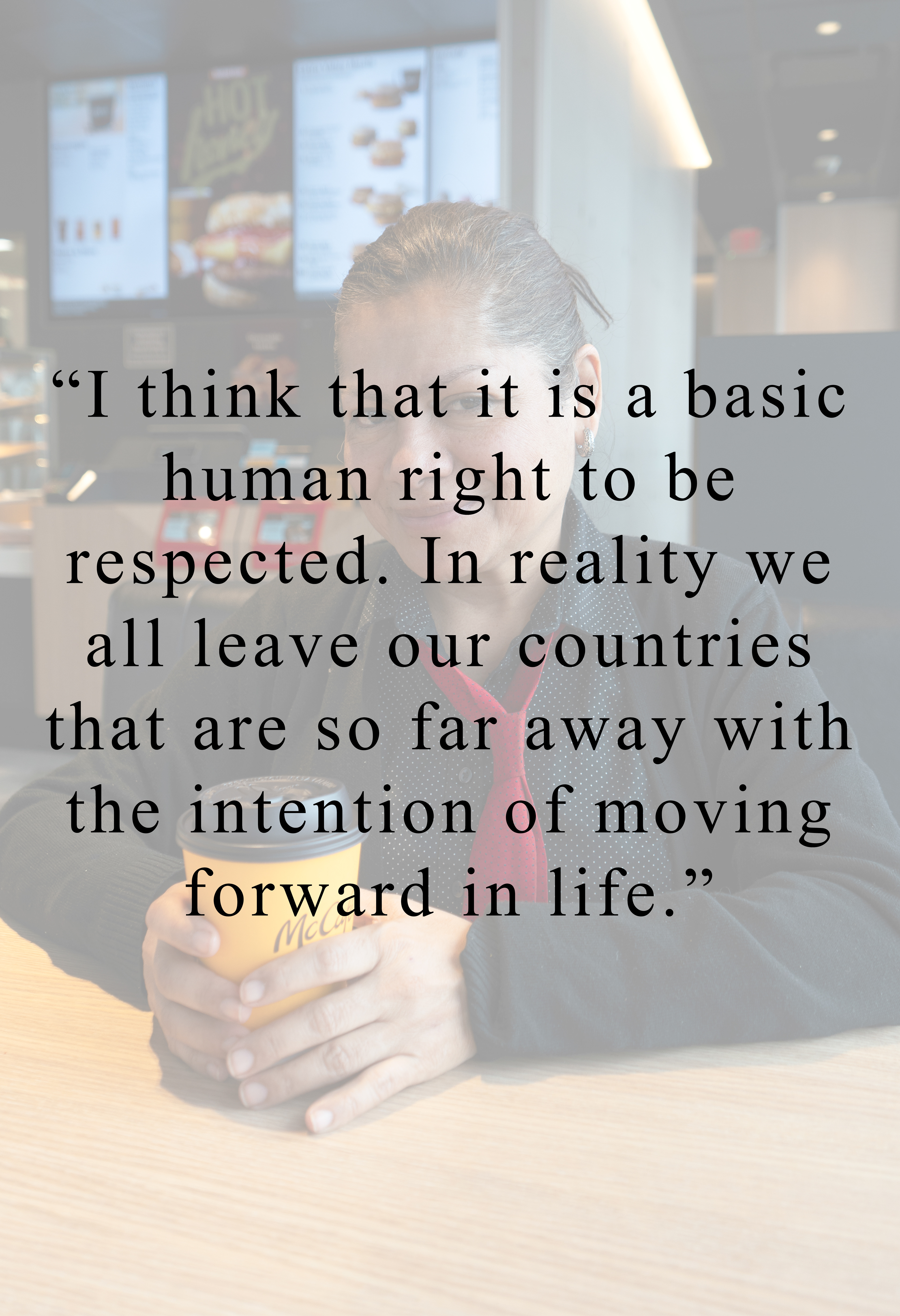
Speaker : I think that it is a basic human right to be respected. People who are born here, no one is the same. We are all very different. I think in reality we all leave our countries that are so far away with the intention of moving forward. A person isn’t going to leave their country just to come to another country to ruin it. The majority of people come to better themselves, to have something, and take care of their families. Many make the sacrifice of coming alone, they leave behind their family, and support them by sending money so that their family can live and survive because in our countries there aren’t jobs, and the ones you can find are paid badly. Many people honestly can’t live like that. So I think they should take into consideration that the people who make the trip from so far away do it to be better, work, grow, and move forward in life. It would be ideal if we could receive a proper migratory status so that people could work here. The truth is the majority of people who work here without a citizenship still pay taxes that they can not benefit from so those earnings are for this country. When the government keeps the taxes from these hardworking individuals then they’re not mad. I think that is the principal, take into consideration the majority of people make a trip that is so dangerous to get here with hopes of just being better and moving forward in life. Also that good people, bad people, working people, lazy people, are everywhere in the world. Right now they’re trying to blame the immigrants but there are those types of people everywhere, everywhere.
Interview 9
Interviewer : What is your story of how you came to be in the United States?
Speaker : We came here about 30 years ago. My dad brought us here when we were little. He worked some time in factories, he would go to many different factories. When he retired and received his pension from the last factory he worked at, with his earnings he opened up an ice cream shop here in Kenosha 22 years ago. We were 8 sisters and we would help our dad work. My mom was in charge of all of the production because she knew how to make ice cream from my grandparents. My grandparents taught her how. As time went by we started to grow, everyone chose their own career, and my parents were a lot older and could not work as much. Around that time other ice cream shops started to pop up and give us competition and things just weren’t the same anymore. My parents thought about selling the shop to other people but we told them how could they give it to other people if the family was still here. So I spoke to my husband and we decided to stay with the shop. We used to be located on 22nd but you know there were the problems a few years ago with the riots, so unfortunately we were affected there. Be it what it will, well now we are here on 63rd and it's much bigger, we have more space, and we are able to keep going just as before. We now have outside workers that help us so much because the newer generations of our family no longer wanted to help us with the business, and now we have lovely young ladies here with us. We have been focused on giving work opportunities only to Latina young ladies who are in school, most of them highschoolers. I have only two rules for them here : good grades and respect for clients. I’ve told them if their grades drop in school they no longer can work here. They have to be very respectful to people and they have to be in a good spot at school because if their mom comes to me and says they’ve gotten bad grades at school because of work then I tell them I no longer need them at work. Because to me studies come first. I tell all of them this job should help serve you as income for school, and in exchange you help my business prosper. But I want to see them with a career. I want them to be professionals. I’m not saying that working here is bad, it is really good because it helped my family and I was able to support my children. However, I want to see more Latina professionals. I don’t want them to give up on school and end up in factories. Right now the employees I have are in nursing school, veterinarian school, cosmetology school, and another one who is going to graduate high school this spring. I tell them I want them all to be something because right now life is too hard. If they have the opportunity to study they should take advantage of it. I don’t want to see them stuck here all their lives, I care about them like if they were my own daughters, and I want to see them triumph in life. There have been times where they come to me and tell me they’re struggling in school and in work but I tell them no if they’re struggling then school is first. We need to show that Hispanics are also intelligent, sometimes we don’t have the support we need, but we should try to do as best as we can. We shouldn’t stay in the mindset of “I should’ve done”. They’re really great girls, and I love having them here.
Interviewer : Growing up in the United States did you have hopes of an American Dream or did this business become your dream when you took over?
Speaker : Well we came here really young and we just followed the routine, and we did go to college too but I don’t know sometimes it isn’t in everyones plans but I tell people, I do have my career, this is my career, I had the opportunity to take over and I did and I don’t think I could function without this career. When it comes to the American Dream I don’t know if you could say it is an American Dream. Well back 30 years ago when we arrived, the dream was to go to college, have a career, be a professional, one like a nurse or police officer, anything but a big professional. You can still do it but now it is a little more difficult. So now is when I say now is the American Dream, because there are a lot more obstacles, but it is possible.
Interviewer : Now that you have your own business and have accomplished to move forward in life, do you feel you have succeeded in having what many consider an American Dream?
Speaker : Well, I would say yes. I have a dream but I also have a family. So my American dream would be for my children to move forward in life, and for them to be something in life. Because we can say that this business is my dream, it is my fountain that has supported me, but I have other dreams. I want my children to have their own dream.
Interviewer : Do you have any more aspirations for the future?
Speaker : We just want to take the business as far as we can. As far as the clientele will help us go because there is a lot of competition around. There is more to achieve. We could potentially start to grow into a chain or at least have another location just like this one.
Interviewer : During these difficult times in the United States, if you were able to make your voice be heard, what is something you would want to say to those who judge and wrongfully discriminate against our community in order for them to consider our perspectives?
Speaker : I think people haven’t given the time to get to know others, because we are not all bad people. There are all kinds of people. I imagine that the majority of Hispanics who come here are all hardworking. We don’t come with intentions of doing harm to others. There are very few individuals who you will hear have come to do bad. So we come to help our families move forward and be good people. I would say we are the key in this country because we are also helping this country move forward. When you think about the fields alone, who does that work? The Hispanics. In the factories, the majority are Hispanics. The majority in construction, agriculture, and more are always Hispanics. So I think that they should give an opportunity to get to know our people and I bet things would change. We are not problematic people, or bad people. We come to work. There are many people who only go from home to work and back. On weekends all we do is do laundry, buy groceries, and clean the house. Why judge one another? If the opportunity to get to know others would happen I imagine this country would be much, much, much better.
Interview 10
Interviewer : What is your story of how you came to be in the United States?
Speaker : I am from Jalisco, Mexico, and I have been here since 1973. I am from a family of Ranchers and I will always continue to be, and will die being a Rancher. One day I had told my dad to give me a license to come here because I heard people say you can make money here. So I said I’m going so I can buy more stock for our Ranch because we had too little at the time, and he told me well my friend is going so let me see if he’s willing to take you with him. That’s how I ended up coming and arriving in California. When I arrived there, I couldn’t find a single place that caught my attention to actually stay and live there because I think God had it written in my plans to end up here. I was brought all the way here and left here in Racine and I would look all around because I didn’t know anyone here, I didn’t even know how I had gotten here, nor where this even was. I had the father of my wife and her uncle who were here and their children. They lived nearby and they saw me standing there in front of a store that belonged to Don Victor where Juarez is. They saw me and said hey isn’t that Laurlo and they started to walk towards me really fast and asked me what I was doing here. I told them that well I was dropped off here and I liked it so I stayed. In those times they paid little and when I went to look for work they said I’m going to give you a job but you’re very young. I told him yes I appear young but I’m big now. He said he was going to trust me but to not play around and I said no I only came to work. He took me to clean at this place, I would shovel from 3am to 6pm. There was only one other person there who spoke spanish and I asked him where was the place where you could earn the most money because at the time I was only earning 96 cents an hour, he said that graining because it was pitwork. At 6pm when our boss arrived I began telling him I wanted to move to a different position where I could earn more because this wasn’t worth it. He only spoke English and called over the other man who I had spoken with to translate. He told our boss I wanted to work through a contract in graining because this job wasn’t worth it. He was very surprised and said let go of that shovel come on, and took me to where the other positions were. He told the others there that starting the next day I would work with them and asked them to teach me. They laughed because of how young I was and agreed. There I began to make a little more because it was through contract and I lasted 9 years working there. With what I had worked I began to buy houses because in those times they were cheap, about 2, 3, up to 4,000. That is when I bought this property as well with intentions of a business. The store part was already there so I decided to continue it in order to buy my ranch and provide for my daughters to go to school. Then I began to think about the way colored people weren’t welcome in many restaurants yet for being colored at the time. That is when I decided to put in the restaurant side to have a place where anyone was welcomed to come eat. Since then my business has always continued to do very well. I’ve had many schools call me and ask me to sponsor them. I tell them if I put my money into your team I know that is money I am losing because I am giving it to you as a gift. I’ll give you whatever you need but I want you all to succeed. If you’re going to compete then give it your absolute all, and when you win, bring me the trophy here. All of those trophies I have on that wall are teams I have funded and sponsored. I tell all of them they need to focus on studies and be determined in accomplishing their goals. So with everything that I have I am very happy and I give thanks to God. God gave me the opportunities.
Interviewer : Now that you have your own business and have accomplished to move forward in life, do you feel you have succeeded in having what many consider an American Dream?
Speaker : The American Dream specifically, no. Because the dream I had was to earn money to buy more cows. I wasn’t interested in American Dreams because I came simply to work. This is a country where you come to work. You come here to become a slave without realizing it. I am satisfied with everything I have accomplished. I told my dad I was coming to be able to buy more cows and God had plans for me. It took me 40 years to be able to have my cows. Now I have many cows, horses, goats, and many other animals. I didn’t accomplish the American Dream but I accomplished the dream I came here for. I came to work and gave my years to this country in order to have what I wanted in my own country. You have to be attentive to what it is you’re going to dedicate yourself to. If you don’t like something, it’s like not liking a chocolate. If you don’t like it and still eat it, it’ll make you sick. Same with any food, well, it’s the same with work. That’s why you have to do exactly what you like in life so that you don’t get tired or sick of it and you’re able to get to wherever you want to get. He who wants to be a bum will be a bum and whoever wants to move forward in life, will.
Interviewer : During these difficult times in the United States, if you were able to make your voice be heard, what is something you would want to say to those who judge and wrongfully discriminate against our community in order for them to consider our perspectives?
Speaker : I think that they’re very wrong in judging us. You see my hand? All of my fingers are attached to the same hand, they’re all brothers, but they’re all different. Just because the middle finger is the bad one doesn’t mean the others are too. What I’m trying to say is we are all human, we are all the same. I have lived here and worked here for more than 40 years serving the community. There are good white people, good black people, good people in all races. In our family, who are hispanics, and I mean all of us hispanics, there are bad people. In the blacks and whites there are bad people. But there are many people who are good of heart, and just because one may be bad doesn’t mean we all will do the same things. No one should judge anyone, only God can judge us.
Interview 11
Interviewer : What is your story of how you came to be in the United States?
Speaker 1 : I came because of the economy. There were no jobs where I’m from. I’m from Oaxaca, and she is from California. I came looking for a better life and more opportunities.
Interviewer : When coming to the United States did you come with hopes of an American Dream?
Speaker 1 : Yes, more than anything, just a better life for the family and have a job to be able to survive.
Interviewer : How did you come about owning your business selling clothing?
Speaker 1 : We started when the pandemic happened and everyone was at home. We went to California to visit her family, we had a connecting flight in Texas and that’s when I noticed how many people had all kinds of unique designs for their face masks and that wasn’t too common here in Wisconsin yet. I told her, when we arrive we should see if there are face masks like that to buy in bulk. That’s when I started to buy a lot and she even asked me what are you doing and I told her I’m going to see how these face masks do because there aren’t many like this back in Wisconsin. We went to other flea markets and saw there were even more kinds and started to buy even the ones for children. When we returned she began to take photos of them and post them on facebook. I didn’t even think about that but she went and began posting. We began to sell many of them, and continued to buy, and we would sell from home just through facebook. People even started ordering specific ones and in the afternoons we would take the deliveries, earning up to 300 or 400 dollars most times. When the pandemic passed and people no longer wore masks she asked me what we were going to do because we couldn’t sell masks anymore. I told her we should invest in dresses, shirts, pants, just artisan clothing. We invested 500 dollars from the earnings we had saved up from selling masks. I trusted a girl I knew who was in Mexico and I asked her if she was really going to send me the items I was paying for. I was nervous but I took the chance and she did send them. That’s when we started selling clothing here outside. We couldn’t come inside because all the spots were taken. Then the guy who had this spot where we are now told us he was leaving and asked if we were interested in having it. He worked here with his wife but he told us if we wanted his spot we had to buy all the products he had left. I told my wife well if you really want to go inside then lets go I’ll support your decision. We’ve been here for 5 years now.
Interviewer : Now that you have your own business and have accomplished to move forward in life, do you feel you have succeeded in having what many consider an American Dream?
Speaker 2 : Well we’re moving forward bit by bit but we would like to be a bigger location and expand but what is happening right now is holding us back right now. The idea is to have our own store one day and sell things in big quantities.
Interviewer : During these difficult times in the United States, if you were able to make your voice be heard, what is something you would want to say to those who judge and wrongfully discriminate against our community in order for them to consider our perspectives?
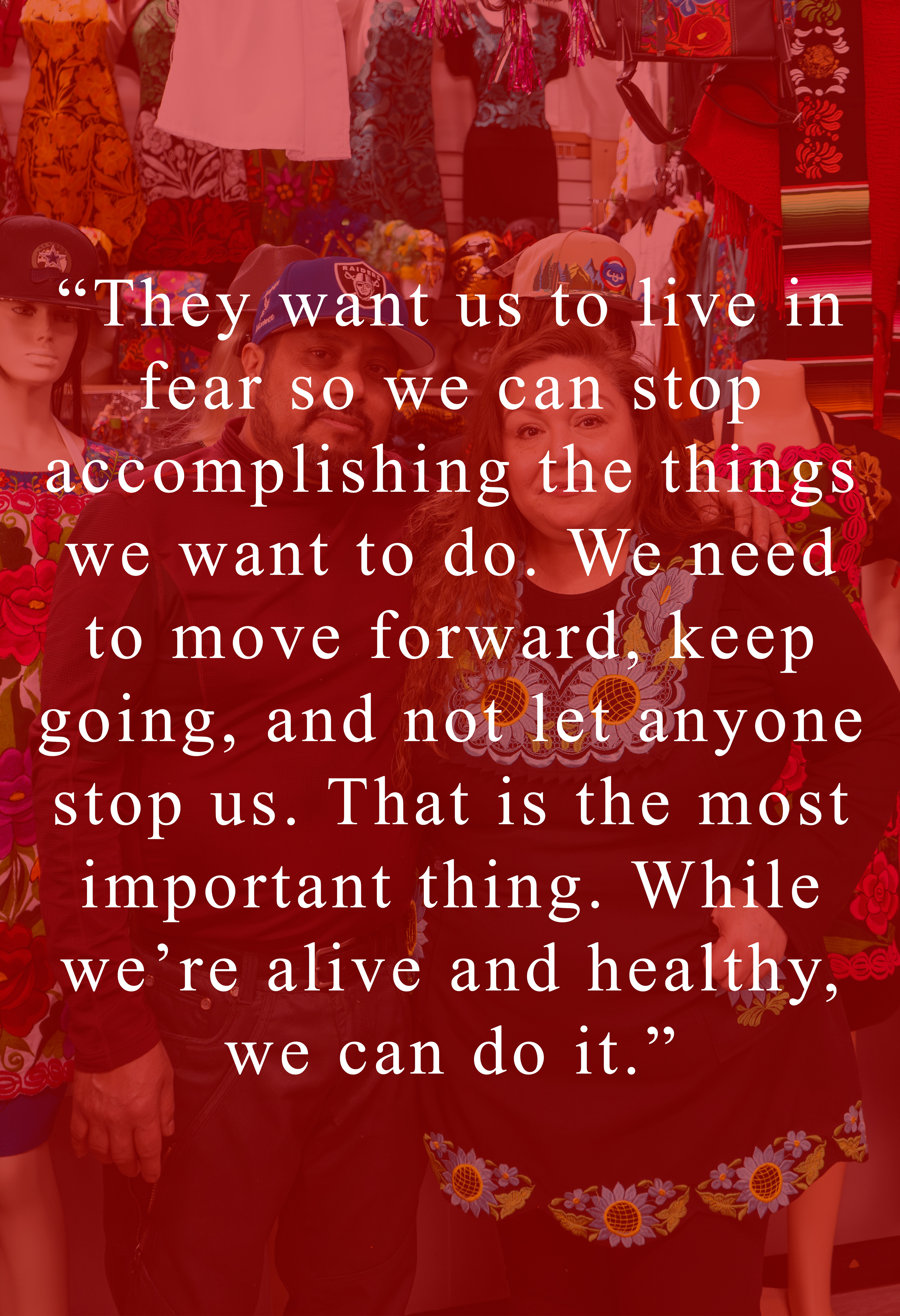
Speaker 1 : Well right now there is a lot of censoring. Someone tries to speak their mind and they’ll shut you down. Honestly, on the internet there are always videos of people being attacked and I’ve tried to speak my mind but I’ve even had my social media get reported or canceled because of it. It is difficult right now especially for Hispanics because they want to dominate over us. That doesn’t scare me though, we don’t show fear because behind their force there is something good. Our hard work and dedication is behind it, and we can not let ourselves show fear because that is what they want. They want us to live in fear so we can stop accomplishing the things we want to do. We need to move forward, keep going, and not let anyone stop us. That is the most important thing. While we’re alive and healthy, we can do it. I would tell them that those things that are being told of us are huge lies.
Speaker 2 : It is a big lie. They all stay hung up on the same ideas, those that are about us all being violators, killers, gang members, and none of that is true. We know what it is like to be here, we know how we really are. My grandfather and my uncles have all served the military. I have many generations of family here who have come from Mexico. Actually, much of this land was Mexican Land. California, Arizona, Texas, New Mexico, was all part of Mexico. It is the fear they have as well and don’t want to admit. They’re scared of losing the land to us but we’re just here to work. The truth is Mexicans have raised this country. There is a lot of racism in all forms, but you start to grow here and realize that everything they say about us is a lie. We are not all the same. There are some bad people but that stuff about violators are in all races, in absolutely all of them, not just us, and the ones who come here with bad intentions are very very few.
Speaker 1 : Even in our own government, even our own President has done many violations. They censor everything and it is too difficult to speak your mind, because if your opinion is different than theirs then things get even worse for you. Honestly, you’re doing something really good in doing this project because you’re seeing how we really are here and you’re supporting us.
Interviewer : Thank you, my parents have always told me, “If you have the ability to have a voice, then you need to be the voice for those who can’t speak theirs”
Speaker 2 : We even ask ourselves at times, how far is this going to go? Because we are preparing ourselves if we ever have to return to our country. Well at least I am preparing myself a lot, preparing our home and preparing in case we have to go back and find what to do in Mexico. If something happens, and we return, well we’ll have to do the same thing again, and start all over again from the bottom. That’s what is sad, that everyone is trying to prepare themselves for what they will do if the worst happens. The truth is, we shouldn’t be scared, because we know we’ll be okay.
Interview 12
Interviewer : What is your story of how you came to be in the United States?
Speaker : Well, I came in 2004 and I came alone. I left the army and received two arrests due to it so my sister told me to come to the United States and that’s when I arrived here. I wanted to be here. I had a lot of hunger or ambition to move forward in life. I had many dreams, but it wasn’t like how I thought it would be. I ended up having tons of issues in the frontier, but thanks to God I was able to cross. After 26 years I was finally able to see my parents again, just last year. I met my husband here and till this day he is my life partner. I started my business with 70 dollars, after I had my daughter. I had my daughter and I didn’t return to work because of Covid. So, Roberto, a mechanic, told me if I wanted to make him food for 10 people, and he would pay me per plate. He put the price and at the time I didn’t know how to cook. I asked him “ well, what do you want me to make you?” He said “whatever you want, but don’t make it spicy”. So I called my mom and I cooked with her on the phone. So I cooked in small portions and she would tell me what to do. My husband then began to buy me everything, all the to go boxes and food plates, and that’s how I started. But honestly I could even burn water before learning to cook.
Interviewer : You mentioned having many dreams, when coming to the United States did you come with hopes of a specific American Dream? What was or still is your American Dream?
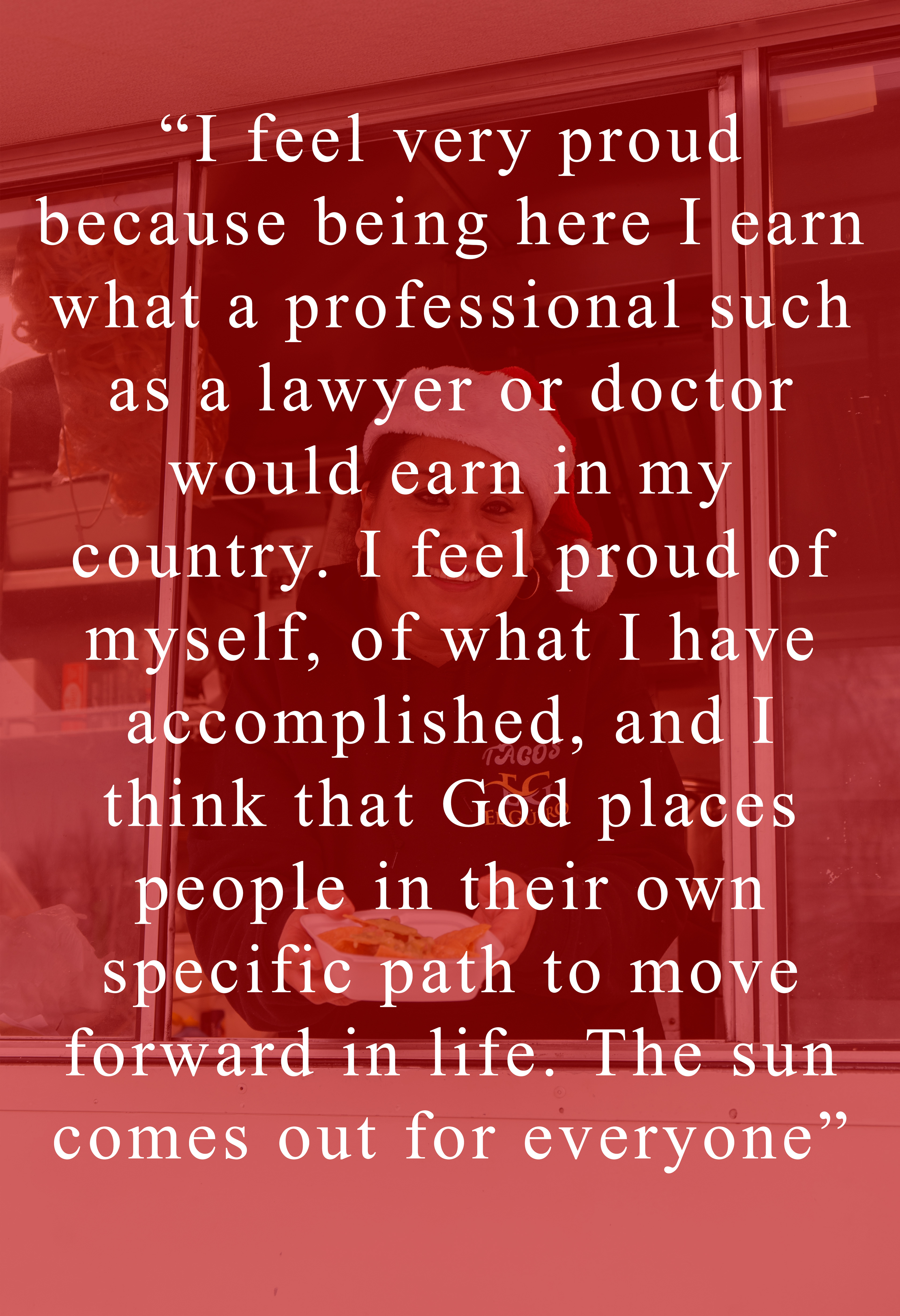
Speaker : No, I never thought I would cook for people. I’ve even come to cook for over 800 people in a short period of time but I never thought about this as my dream. I have always said only God knows why he puts you in certain situations because this truck we’re in, I never even thought about it or about having a food truck in general, it was not in our plans. Years ago I started working as a waitress in a restaurant and I would earn great tips. I wasn't even worried about my checks because my tips were always so great so I never felt like I was actually working. I always liked to work with people and attend to people . It never felt like a job. So I've always liked doing what I do. Actually I feel very proud because being here I earn what a professional such as a lawyer or doctor would earn in my country. I feel proud of myself, of what I have accomplished, and I think that God places people in their own specific path to move forward in life.
Interviewer : Now that you have your own business/job and have accomplished to move forward in life, do you feel you have succeeded in having what many consider an American Dream?
Speaker : Yes, I feel that I have accomplished the American Dream, but at the same time I feel that the American Dream has ended with everything that is going on. I keep giving it my all for my children. Thanks to God I have my house, our business, but I think the American Dream has disappeared with everything with ICE. The only thing I ask for from God now is that my children will be okay, that they can move forward in life as well and accomplish whatever they desire. God has been more than good to me. We have health and a job, because having a job will save you.
Interviewer : Do you have any more aspirations for the future?
Speaker : Yes, we want an actual restaurant, but it is very expensive. They offered us the location that was closing across the street where Andy’s was but the rent was extremely expensive and the place was missing many things. Even the new owners who did buy it haven’t even been able to open because it’s so much money. But here we are and blessed because I think we sell a lot and I think that people really like it here. I would love to have a restaurant so that one day I could pass it down to my children. However, I am still accomplishing my dreams.
Interviewer : During these difficult times in the United States, if you were able to make your voice be heard, what is something you would want to say to those who judge and wrongfully discriminate against our community in order for them to consider our perspectives?
Speaker : Well I think that we deserve everything beautiful that happens in life. There are a lot of American and African American people here and it brings me joy when they say “We saw your food truck on google, it has 5 stars” or “They’re the best tacos”. I feel like I don’t have an income where someone can say I have it because of that. I have earned this and earned people’s respect to say that our food is good and that they’re happy here. I tell Latino people all the time, If I could do it, they can too. I’ve helped people get their permissions and licenses and tell them, I did it, and the sun comes out for everyone.
Interview 13
Interviewer : What is the story of how you came to be in the United States?
Speaker : I got here when I was eight years old and I did my school here in high school. And from there on I started working for somebody that would work in a place where they would sell cheese and little random stuff like what we sell right now. I worked for them for about nine years. After that I got together with my husband. My husband had a little stand already with dry peppers and spices and stuff. And from there we joined and I kind of put in my knowledge and he had his knowledge so we united to make a business together and grow. Now here in Wisconsin we started in COVID. So we started off in Chicago selling at the flea market and then from there on they closed down the flea market because of COVID. Then we got back and there was an issue with licenses and stuff. They didn't let us in until we had a specific license for the city. And we did that process but we had to wait until we had the physical license with us so we could go in there and start selling. So practically we were without work a whole month. And that month we came over here from the side of Wisconsin to see if we were able to sell. And we did so from there we got adjusted with health inspectors and all the requirements that we had to meet to start selling. And so 2020 so COVID brought us to Wisconsin and we stayed.
Interviewer : Why did you and your family decide to leave your country?
Speaker : It was starting to get dangerous as far as how I can say it is, just in general. It was just not safe anymore. I mean, it wasn't as bad as nowadays, but it was not safe. And somehow we got confused by some people for going in a car that looked like one that other person had. And we were encountered. And so my dad got really scared because it was not just one of us, it was my mom and all the kids, four of us in total.
Interviewer : Growing up in the United States did you have hopes of an American Dream?
Speaker : Yes so my family, they had their own store grocery store in Mexico so it was kind of in our family, the business, uh I'm not saying like a huge business, but it's a little bit of knowledge of how to work on selling to somebody so make sure you survive
Interviewer : Now that you have your own business and have accomplished to move forward in life, do you feel you have succeeded in having what many consider an American Dream? Do you have hopes of accomplishing more?
Speaker : Hopes of more because with ice, especially in flea markets, it's the number one business in general that has gone down. From Trump being in office since the January of his first year, that's when it was lonely because of everything he promised he was going to do. And then little by little he accomplished it. So it's been hard. It's been picking up lately, I want to say after Thanksgiving, after Thanksgiving it started to calm down, yeah.
Interviewer : Speaking of political issues, during these difficult times in the United States, if you were able to make your voice be heard, what is something you would want to say to those who judge and wrongfully discriminate against our community in order for them to consider our perspectives?
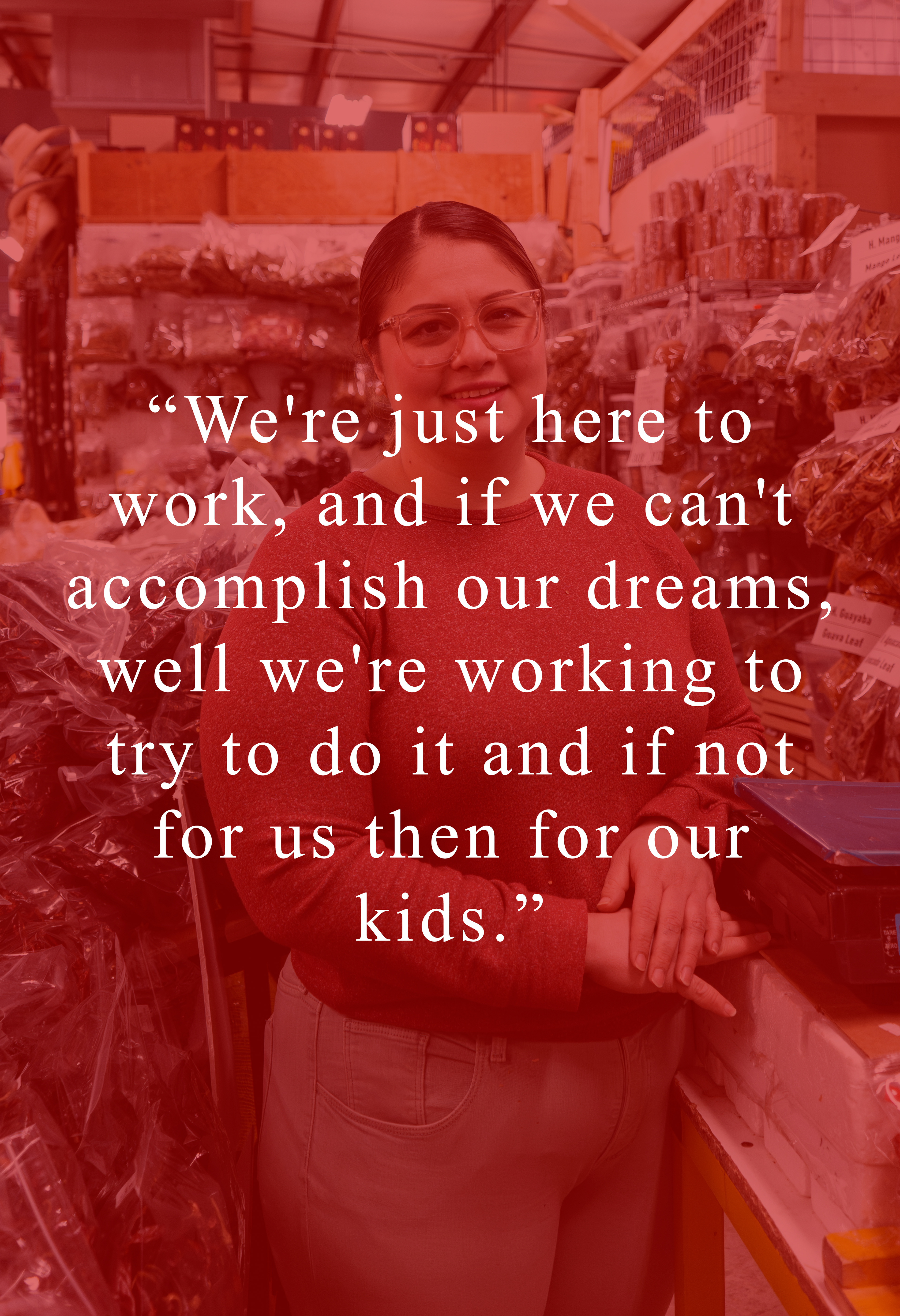
Speaker : That we're just here to work and if we can't accomplish our dreams well we're working to try to do it and if not for us then for our kids.
Interview 14
Interviewer : What is your story of how you came to be in the United States?
Speaker : I am from Durango, Durango, Mexico and this is a family business. My reason for coming is different from many others normally are. First, my wife, she came way before I did. She came when she was little, as a baby, but we met in Mexico, in Durango. They came to the United States, but when she had returned 10 years later on vacation I saw her again and I told myself I would come here. So I came to the United States because of her.
Interviewer : When coming to the United States did you come with hopes of an American Dream or just in hopes of being with her?
Speaker : In reality, I was coming here with the idea of marrying her and then taking her back to Mexico with me, but once I was here I ended up staying. The economic situation here is much better. I knew there were more opportunities here. My dreams were always to have my own restaurant. My father worked in a very good restaurant in Mexico and I would see how he worked but for me it ended up not being a restaurant but instead a store. It is a lot of work but I really like it, I really like having a store.
Interviewer : How did you come about owning your business?
Speaker : Well the store actually existed already but had a different name. My brother in law is a contractor, and we became business partners. He is the one who found this store because he lived in this area. I lived in Illinois and he invited me to be his partner to buy this store. That’s why we have this store.
Interviewer : Now that you have your own business and have accomplished to move forward in life, do you feel you have succeeded in having what many consider an American Dream?
Speaker : I would lie if I said no. I do feel like we have accomplished, and I say we because we are the whole family, accomplished the American Dream. We have to work very hard to maintain it, but it is a huge difference working in a random place over working in your own store. Of course it is a huge responsibility because you have a business and many employees, but it is very different coming to this business that is mine versus going to a place where you are limited to going and leaving on a specific work schedule.
Interviewer : Do you have any more aspirations for the future?
Speaker : Yes, well, we have two locations, this one here and one up in Burlington, but I think it is more than enough. It is good to dream with more, but it is way too much work and you have to make sure you have people you can trust in. Here we have about 20 years with this store, and the store before us was here for a while too. What I’m trying to say is I feel that it would be too much spending to do more, and now I think it is better to focus on having the right people in my business and work a little less and start to relax a little more. I don’t want more to be honest. It is way too much work and I feel like I am good right now, it is sufficient for us to be able to live well and be at peace.
Interviewer : During these difficult times in the United States, if you were able to make your voice be heard, what is something you would want to say to those who judge and wrongfully discriminate against our community in order for them to consider our perspectives?
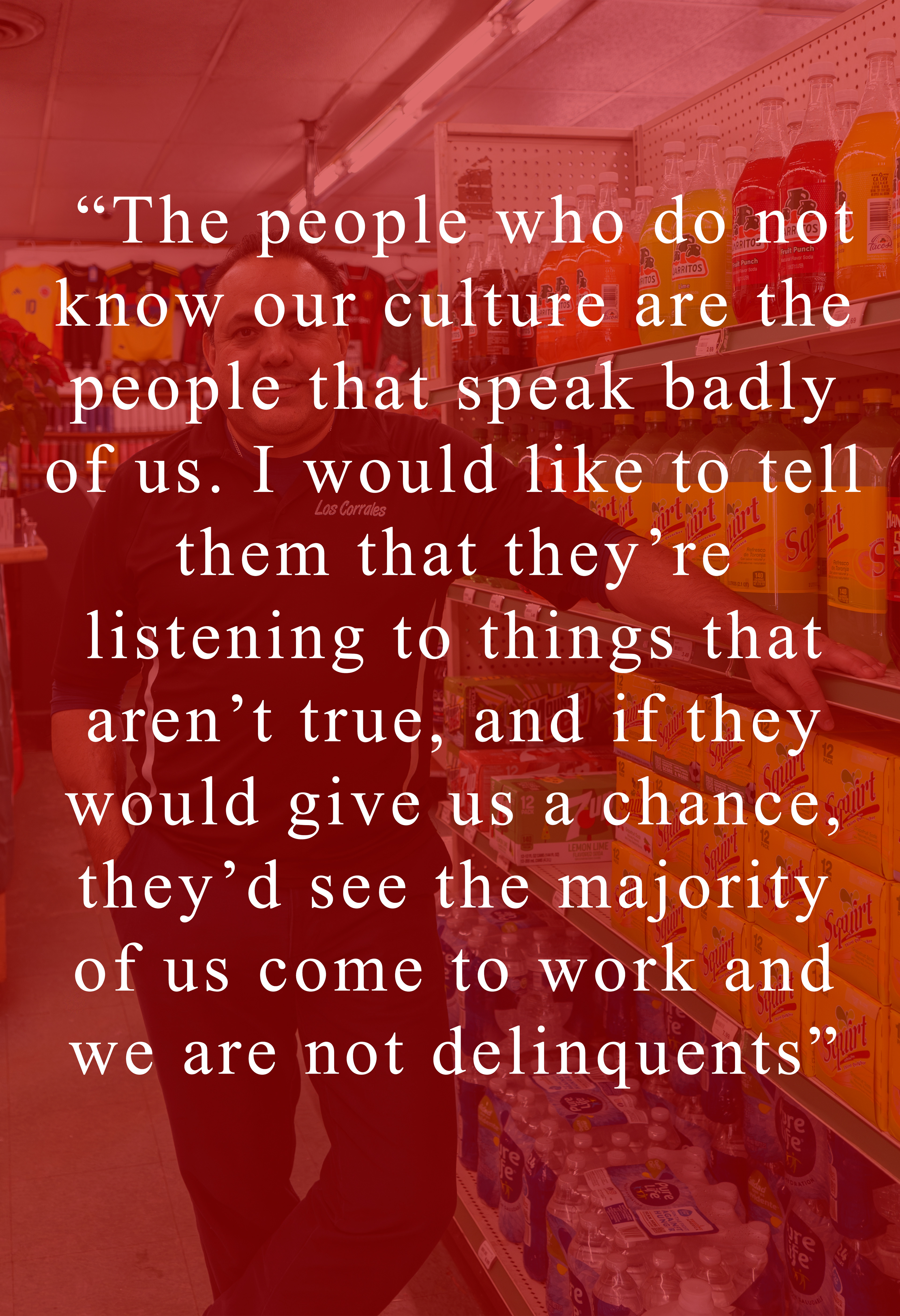
Speaker : Well, unfortunately, the people who do not know our culture are the people that speak badly of us. I have many American customers here. Those people who come here are very good people. So those who judge us are misinformed. I would like to tell them that they’re listening to things that aren't true, and if they would give us a chance, they’d see the majority of us come to work and we are not delinquents. The majority of us are really hard working. So, I’m not sure what the right message would be, but I’d say the news that they’re giving is incorrect, we are not all like that. I want to say that right now, thanks to God, there are more good than bad people. We are hardworking people and can be an example of being good hardworking people and we can do many things. We arrive with nothing, start with nothing, and manage to do something with our lives here in the United States. We are very kind people. We always welcome all people and I think the people who speak poorly of our people are the ones who have never given us a chance or tried to get to know us completely.
Interview 15
Interviewer : What is your story of how you came to be in the United States?
Speaker 1 : Well, I came here when I was nine months old, but I think initially both our grandparents, they came in migrated farmers and they paved the way for the rest of the family to start coming to the United States. But yeah, I came when I was nine months old, like a baby.
Speaker 2 : Same with me, I came when I was five years old.
Interviewer : What difficulties did you experience growing up in the United States?
Speaker 1 : I think the only hardship was I think just the language barrier. When I came my parents only spoke Spanish, so I ended up having to repeat the second grade because of the language barrier. They struggled. I saw my parents struggling with the language, so they tried to come, they confined themself in this small little town where everybody spoke Spanish and they were able to move around, but when we got older, we were the translators. They wanted something, they would take us with them. So that's the kind of area where we saw them struggling, but they did their best. They are, you know, hard working, my parents all the time. They worked, basically for us, they earned minimum wage, but they, they tried, they put us into a Catholic school because my parents didn't want us to go to public school because at that time, there were a lot of gangs. So, they sacrificed a lot. You know, they just worked, worked, worked for us to have a better education than they had.
Speaker 2 : Yeah. Same with me, I think the language, uh, I remember, uh, I started kindergarten here. I didn't understand anything that the teachers were saying until like, the second half of second grade. And so, that impacted me in terms of, I was always behind in English, phonics, that, the general arts. But one thing that always resonated with me was math, and so ultimately, that led to me being an engineer. I'm an engineer by training. Electrical engineering.
Speaker 1 : And I'm a teacher by training. So, then I stopped when we opened the business.
Interviewer : Why did your family decide to leave your country?
Speaker 1: Just to seek better opportunities because they were from a small town, my parents didn't have, couldn't have, I think their, I think the highest level was elementary because they had to go work the farms. So, you know, like, if that, they realized that they needed better opportunities for us, they wanted to seek better opportunities for themselves and eventually when they had their own children. So, my dad started coming over here when my brother was born because he wanted a better opportunity for his family. He knew that staying in that small town was not gonna happen.
Speaker 2 : Yeah, and my mom, a pivotal point for her was when she lost her job because she was working on technology that was obsolete. They closed the factory and she was like, "Okay, what do I do now?" And we were living in Mexico City, and she made the call, "Okay, we got to figure out a way to, you know, go, go to the United States and..." Again, because all she had was, "Do I go back and help my dad, the farm ...farm, right?" And I was five years old at the time and, or four years old at the time, and okay, is this...There's potential there, right? Yeah. So glad she made the sacrifice to try to find a better, better life for, for me. Yeah.
Interviewer : When coming to the United States did your parents come with hopes of an American Dream?
Speaker 1 : Yeah, for, I think for my parents it was like, just be able to provide for his family. That was his American dream, to be able to provide for his family and provide better opportunities for us. They always, he always used to say, "Go to school, go to school, like get a better education. That way you don't struggle like we’re struggling now."
Speaker 2 : Yeah, sometimes I think the American dream is relative, right? So, um, what we're able to accomplish, um, I don't know if that's what my mom had set out for her. Right? Because her starting point was much more different than mine. And so, her moving here and just having the opportunity, having a steady job, uh, being able to give me a good education. To her, that was probably the American dream. Mm-hmm. In her perspective, right? We have a ...I think an obligation to continue to progress for our families, and so we've been able to achieve the American dream in a different way.
Interviewer : You were raised here and had a very good education, have good jobs and well, and now you have your own business, do you feel you have succeeded in having what many consider an American Dream? Do you have any more aspirations for the future?
Speaker 1 : I think we still have hopes of accomplishing more.
Speaker 2 : Yeah. I mean, we're, we're definitely happy with what we've done. What we have.... so far. Our parents never slowed down, they never gave up, right? They continued to push, right? So now we're looking at there's... Well, what we're gonna do, but also what we're doing for our kids, right? So, you know, we're proud to say that our oldest daughters just got accepted into dental school. And so, is that something we could have achieved? I don't know ... we're, we're paving the road for her and our other kids in whatever their dreams are, right? Without having to, um, struggle with some of the things that we struggled with and even more than our parents struggled with.
Speaker 1 : Yeah. They're definitely not gonna struggle as much as we struggled. They're probably gonna struggle in different ways, but not that way how our parents struggled and how we struggled to get to where we are right now.
Interviewer : How did you come about owning your business?
Speaker 2 : You know, it was...Why I latched on to what your mom said, is you gotta knock on doors. Our story really started, you know, probably over 20 years ago when we decided to s- start investing in real estate. And so we started slowly building, um, a little bit of, uh, equity and we were in a position at some point to say, "You know what? We could probably, you know, if we divest from our real estate, um, have enough money to do a laundromat", which, um, uh, was, I, I think a better, uh, business opportunity for us. And we made the leap, she quit her job, we reached out to Distributors...we networked, we knocked on doors. And, uh, they opened up. This opportunity opened a door for us that we were not expecting. And what's important is that you knock on doors but you also have to be ready to capture that opportunity. And we were ready because we were preparing years in the making. It was years in the making 'cause it's not like the capital that's required to do something like this is not something you come across one day. It's difficult. It took, it took us many years and, and many, sacrifices, hard work...sacrifices and investing and saving money to be able to, uh, do something like this. And so we were able to capitalize on that and, uh, here we are.
Interviewer : What are some of the aspirations you have for the future ?
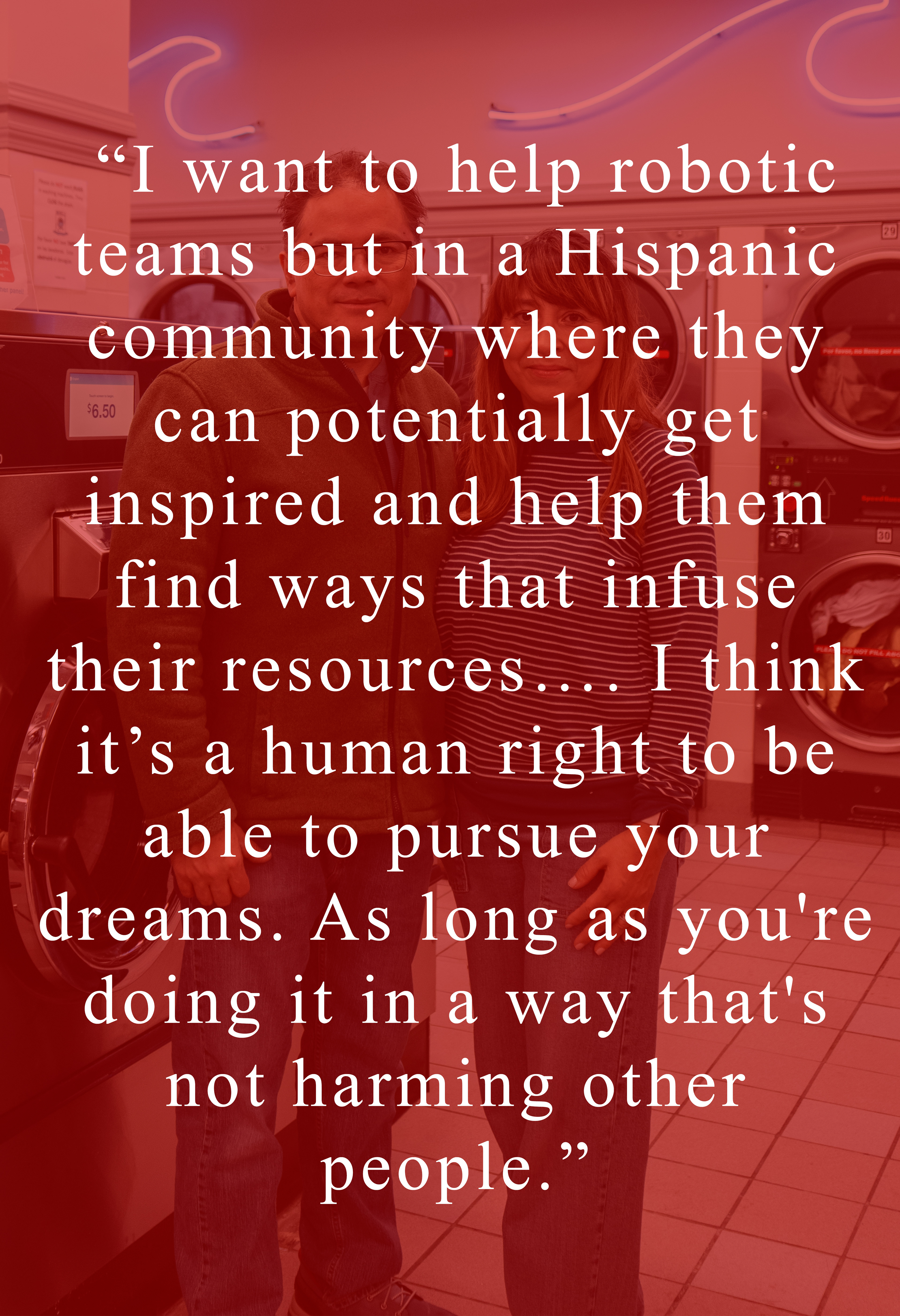
Speaker 2 : You know, We've been growing the business but then also do more for the community, like, you know, try to help the community more, in that aspect because we're, you know, we're privileged to be able to do this but trying to reach the community, help, find ways to help out other people, I think that's good. That's such an important aspect of it because I think I've been fortunate that I grew up in a typical migrant neighborhood, not, not the nicest of houses and the things that we're, we're struggling with. I was able to break some of the cycles that go on there in the neighborhood. And, um, I see a lot of potential but there aren't a lot of resources. Resources for those individuals to help, help more or break out of that cycle. For example, I helped coach a robotics team. I coached it in a neighborhood that we live in because that's where my son is. But realistically, there's a lot of support there because there's a lot of professionals that live in the neighborhood and they, and they're all engaged in helping the kids. And so that robotics team tends to do very well. And what I've seen in other communities is that they don't have that level of support. Resources, support. But realistically, there's a lot of support there because there's a lot of professionals that live in the neighborhood and they, and they're all engaged in helping the kids. And so that, that, that robotics team tends to do very, very well. And what I've seen in other communities is that they don't have that level of support. Resources, support. And I... There was one particular team two years ago that went to the competition and they... and when you look at the robotics, it was not a great robot. They had a lot of design deficiencies and things of that nature, but their story was, "You know what? We got here, we had a coach, he had to leave us, he couldn't coach us anymore and we put the robot together with the resources that we had." And when you see that and you're thinking, "Man, these kids were just clawing and fighting to try to, you know, put together a robot that was competing with robots that are well funded, with teams that have a lot of technical support". And to me I, I... that's a big disparity, right? And so once I quit my previous job, at some point if I'm able to focus more on the laundromat and I have the opportunity to, uh, have more time, that's what I wanna do. I want to help robotic teams but in a Hispanic community where they can potentially get inspired and help them find ways that infuse their resources…the advantages that they don't have that other well-funded teams do.
Interviewer : I appreciate that very much, I also was raised by immigrants. I also was born here because both my parents came here with my sister also at a young age. She also came here at three years old and I think we also struggled and I think there were a lot of things that... Maybe our paths would've been a lot different if we had those opportunities, like you said. I know I had, like, my dreams when I was little, like what I wanted to do didn't turn out at all. Mainly because we didn't have a way to be able to take those classes or get that type of education to do those things. Um, so I think that's very inspiring and I appreciate that very much .I think, I’m just very sympathetic to the people who, like you said, like to come from those neighborhoods, because we come from those neighborhoods as well.
Interviewer : During these difficult times in the United States, if you were able to make your voice be heard, what is something you would want to say to those who judge and wrongfully discriminate against our community in order for them to consider our perspectives?
Speaker 2 : You know, if you, if you talk to an individual, get to know their story, get to know their struggles, I think you're gonna find a lot of common ground in terms of especially parents; they want a better life for their kids. They want their kids to have the best opportunity, the best education. It doesn't matter where you come from; that's just a natural instinct. That's like a natural human... I think that's a human right, to be able to pursue your dreams. As long as you're doing it in a way that's not harming other people. I mean, if you're physically harming people, that's a different, that's a different story. But if- if you're here just trying to get ahead, I think everybody should have that opportunity. And, you know, we created these, these borders and to me, if you sit next to somebody and you hear their story, they're no different than you are They're having the same struggles, they have the same aspirations for their kids and I am not... We are not going to get in anybody's way if they're going to achieve... In the pursuit of those, those pieces. We don't care about their status; we actually sympathize with their status. But as long as they're someone here trying to get ahead, who are we, who is anybody to get in their way? They're hard working; they're just trying to find ways to provide for their families. Don't judge them by just a small group of people, you know?
Speaker 2 : I mean other days, we're all speeding down the highways. We're all breaking the law at some point, come on. So that's how we feel. And we're very sympathetic to that community and, um I have no issue saying that I have members in my family that did that.
Speaker 1 : Well, yeah. We both do.
Speaker 2 :When you talk to them, they're just trying to get ahead.
Interview 16
Interviewer : What is your story of how you came to be in the United States?
Speaker : I am from Mexico, from a ranch, and I came because in the area I’m from there isn’t much. There is a lot of poorness there. I have 12 brothers and we were very poor honestly. I would see people who would return from here to Mexico and would bring back money to spend, meanwhile I didn’t even have enough to buy myself a single can of soda. Not that I am rich now but thanks to God this country allowed me to work. I arrived in Chicago with a brother I had there. From there I moved here to Wisconsin but went to Fond Du Lac. I worked very hard there and would only earn about 250 dollars a month while working 12 hours a day. I was very young, well I still felt like a little boy because I used to cry every day. When the first snow fell I remember crying, we didn’t have a car and would walk to work everyday. I remember running to the nearest restaurant as it snowed and told my brother I was scared because it was snowing. I was so young and knew absolutely nothing about the United States and he explained to me that it was normal for that to happen because it snowed here. I thought the world was ending because I didn’t even know what snow was. I was the youngest out of all my siblings and was very attached to my parents. I missed them very much and I would cry when they told me that my father wasn’t doing so well. I kept working to help them in anything I could. Many of my brothers were here and I understand the government, I understand why things are how they are, and I respect it, but I try to be as good as I can here in this country. I came about 25 years ago and during those times people would die over anything back in our pueblo because there wasn’t enough education there. My father ended up getting diabetes, I think he was one of the first ones to have diabetes there and people would get scared because they didn’t know what was happening. I was scared too. I was told my dad was going to pass and he sent me a letter telling me to return to Mexico. He had arranged for people to meet me at the airport but I ran into problems because the only form of identification I had was my birth certificate and the government believes that we are all bad and criminals because of those who do come with bad intentions. We have to be conscious of the fact that there really are some bad people who come with bad intentions but there are also good people. There are all kinds of people. Thanks to God we aren’t all bad, and many of us come to fight for many things. I have my family here, I have 3 children, imagine if I get deported to Mexico when I don’t know anything about Mexico because I came at a young age and made my life here. I have struggled so much in life, but I give thanks to God that I have never gotten into problems. I think it’s gone pretty good for me here and I help the country because I pay my taxes, my insurance, and I pay everything that the government tells me to pay.
Interviewer : How did you come about working here?
Speaker : I don’t like moving around a lot. I moved from Chicago because at the time it wasn’t safe and there were a lot of bad people there. I didn’t want that for my children. Then when I arrived in Wisconsin I ended up not liking to work where I was. I was working 12 or 13 hours everyday even on weekends and would have to leave my children with other people to watch them. Well the factory where I was not happy ended up burning down and they closed while they remodled, so I began looking for work more in this direction. I would pass by here all the time and this restaurant was about to open. I had experience working in restaurants because I had worked in some back in Chicago. So I ended up finding myself here and ended up being a manager here. I wasn’t going to just wait around to hear back from the factory. I moved here and I did it so that my children wouldn’t have to suffer anymore because I would take them out at 5am to the babysitter even on very cold snowy mornings. That is how one survives in this country, because being able to do something here is not easy. After my children began to grow up I decided to still stay here because I thought to myself what is the point in leaving if I have been here for a while.
Interviewer : During these difficult times in the United States, if you were able to make your voice be heard, what is something you would want to say to those who judge and wrongfully discriminate against our community in order for them to consider our perspectives?
Speaker : I would ask why they think we are all criminals. In what ways are all Latinos bad? Yes there are some bad people but not because of a few are we all bad. I don’t wish any bad on the country, but they shouldn’t treat us the way they do. I always say, what’s bad is bad. They’re doing a lot of bad to the community. This community that is good, because here in Kenosha there are a lot of good people. There are good people everywhere. If there are bad people then they should arrest them but they shouldn’t do that to good people. It is not fair because many of us now live in fear. Imagine if something were ever to happen to me, I would lose everything I have worked for all my life. That’s not okay. I don’t wish bad on anyone, but we do a lot of good for the country as well. The only thing we can do now is live in fear, have precaution, and try to move forward in life carefully.
Interview 17
Interviewer : What is your story of how you came to be in the United States? Why did you or your family decide to leave your country?
Speaker : About 22 years ago I came from Mexico, I’m from Mexico. The decision to come to this country was always to look for a better life. We always have the idea that in our own countries we can not accomplish things we want, but coming to the United States is always the goal to be able to earn a little more than what we would have been able to over there. But at times sometimes people end up having to stay here to live. What people are always looking for is in the economy. And the hope of a better economy is what gives people the strength to travel all the way here, to this country, because we know, on the frontier there are many difficulties. They always say there are bad people on the path here, who can rob you, assult you, do this and that, but basically people come with the idea with the dream that by coming here you can make a difference.
Interviewer : When coming to the United States did you come with hopes of an American Dream?
Speaker : No, the idea was always to just get here and work maybe 3 or 5 years then go back to Mexico. But life changes ideas. In those 5 years I was able to make some income but I ended up not wanting to go back. It is a better life here to live here. In those 5 years I ended up getting married and I had my daughters. My daughters are now 22 years old and 18 years old. And the good thing is that my parents and siblings came to America as well, so now we are all here together. I think in those 5 years that my family wasn’t here I did miss them a lot but now having them here and feeling so at peace in this area I decided to stay here and live better. Interviewer : Now that you have your own business and have accomplished to move forward in life, do you feel you have succeeded in having what many consider an American Dream?
Speaker : Basically, many people think that by having a business it is your American Dream, but by accomplishing to have your own business is even a much harder effort that begins, because in reality, you try so hard to get the money together to start a business. Then you have the money, open the business, and sometimes it’s not what you expected. Sometimes it’s not enough clientele or the income you thought you would produce. And even then, you have to try even harder than before to keep moving forward with your business.
Interviewer : Do you have any more aspirations for the future?
Speaker : Well, I just opened this business about a year ago, but in reality there are so many more goals. Like I said, one may think just opening the business is accomplishing that dream but once you do it and start to learn how to run a business you start to learn how things work and it may not be what you think. So, yes, I think opening my salon was a dream that I had but now I would love to build my clientele and have my own branding to open even more salons.
Interviewer : During these difficult times in the United States, if you were able to make your voice be heard, what is something you would want to say to those who judge and wrongfully discriminate against our community in order for them to consider our perspectives?
Speaker : Well in my opinion, when it comes to politics there are many opinions that sometimes are good and others that are bad, but in reality we just come to work. It’s true there are some who don’t come to work, but they should focus more on the majority of those who come to produce help to this economy. Us Hispanics always have the idea of working, coming to work, or even opening up our own businesses. Why? Because in reality we believe that by opening our own business it will help us better our way of living. And like I said, I have two daughters and I’ve always told them that there are good and bad people but in all areas not just a certain race. If I could express my opinion I’d say we are not all the same, and to please not attack us anymore in those ways without getting to actually know us.
Interview 18
Interviewer : What is your story of how you came to be in the United States?
Speaker : We’re from Maratío, Michoacán, Mexico. We arrived in 1997, like many others, without a single cent in our bag. Actually the only thing we had was 100 Mexican pesos that wasn’t worth much here. Well thanks to God, we had the motivation to move forward in life and well here we are me and my wife and we’re just trying.
Interviewer : When coming to the United States did you come with hopes of an American Dream?
Speaker : No actually, I even back in Mexico worked with bread in a bakery. I am now 52 years old, I’m from 1973 but I’ve been working with bread since 1988 in a bakery. I have like 35 to 40 ish years somewhere about there working as a baker. But yes we did dream of having our own business at one point.
Interviewer : Why did you and your family decide to leave your country?
Speaker : Well, like many others may tell you, it is not easy over there in one's own country, to be honest, we came for something better. However, you could say that here we are in one of the most expensive countries in the world. Like I tell my wife, in our country we didn’t have to pay any type of taxes or interest, but here we have even had to pay thousands a year in just interest. It’s a lot, what we have had to pay, but we just keep trying harder, there must be a reason why we ended up here, right.
Interviewer : How do you feel now that you have had a successful business?
Speaker : We feel really good about it, it might be surprising because we are a family business we only have 2 or 3 other employees, but we feel really good. Now thanks to God, our clients, and anyone else who supports us because thanks to them we have a job.
Interviewer : During these difficult times in the United States, if you were able to make your voice be heard, what is something you would want to say to those who judge and wrongfully discriminate against our community in order for them to consider our perspectives?
Speaker : What is happening is, well honestly, an injustice. One feels incapable of not being able to do something about it but we don’t all associate with each other. We shouldn’t all be grouped together. There are good people and bad people, but in reality we all come here with a dream.
Interview 19
Interviewer : What is your story of how you came to be in the United States?
Speaker : I came in 1993 from Honduras, and I started my business here. I remember that I started with my brother in a small store that was called Morales Grocery, in Waukegan. I worked with Don Reynaldo Morales for a while and afterwards the opportunity presented itself to me and my brother. A man who had his own business on Grand Ave arrived and asked us if the business was ours or someone else’s and we told him no we work for someone else and he asked us, “Well would you like to work for yourselves?” and well of course anyone would want to work for themselves . That’s when thanks to God we had the idea of opening our own business. But in reality to be honest with you, we didn’t have any kind of funding to begin. I remember the entire family and friends had to lend us money. We started in Waukgean and, well for whatever reason life had other plans for us and we had to close our business in Waukegan in 99’, and we were left with nothing, basically. Around that time we used to always come to a Christian Church around this area in Wisconsin and I remember we used to drive past this local all the time. I remember I would tell my brother, “hey look this local is really nice for a nice little business”. And well that’s how we ended up starting here. We opened here in the year 2000, and thankfully thanks to god, well we’re still here. We are a family business and work together. Honestly, it’s a beautiful thing to know we have a business that serves the community and we give thanks to God and to the Hispanics who genuinely like to work, and who, in reality work more than they should, and at the end it’s a beautiful thing to do knowing we can help others, encourage them, and tell them that we can all do it. In first place God in everything and he will give us the rest at our own volition.
Interviewer : When coming to the United States did you come with hopes of an American Dream?
Speaker : The truth is no, honestly no. I never thought I would have a business, the truth is once someone arrives here, and you like something, me personally I always liked business. I would always tell my brother we should look to do something. But the truth is we never planned an actual business, we knew nothing. It’s not that we know everything now but in the path of life with dedication and faith, the daily struggle, no one is born with knowledge. In the path of life, life is a school itself where we can learn between the good and bad in reality. But in reality one only comes to this country to work and manage to move forward in life with their families. Honestly, I give thanks to God because I have 3 sons who were born here. Thanks to God and thanks to the United States because here we have always been given opportunities to come and do something. Personally we come from a very humble family back in Honduras, and the truth is one gives thanks to God because one can help others. So that was our mission in coming to the United States, to help the family, and if there is necessity with other people, and you’re capable, then with much pleasure help others as well.
Interviewer : Now that you have your own business and have accomplished to move forward in life, do you feel you have succeeded in having what many consider an American Dream? Do you have any more aspirations for the future?
Speaker : I think when one comes to know God in their heart, they know that with what God gives them is the only thing necessary to live. So I have come to understand that after God, we are okay there. So, to keep trying my best, in all honesty, the struggle of everyday, is beautiful because at the end of the day one knows working, providing for the family, and providing for others is all we need. There have even been other people who have opened other businesses and I tell them “well, we all can do it”. Honestly, the first few years are a lot of sacrifice, because one doesn’t know how to do everything, but in the path of life one goes learning and gaining experience and God helps you move forward. So, that is what I try to encourage people who want to open a business. We all can, Just put faith in God and he will give you the rest.
Interviewer : During these difficult times in the United States, if you were able to make your voice be heard, what is something you would want to say to those who judge and wrongfully discriminate against our community in order for them to consider our perspectives?
Speaker : I think that because of some we all pay the price. I think there are some who commit errors and at the end of the day we’re all the ones put into the same problem, or considered the same. But I have understood that the majority of us come to work. We try so hard to obtain a daily income to eat and help our families. But the truth is, we are not here to judge anyone. At the end of the day I say our own doings will tell who we are. So, in the end, if we dedicate ourselves to working and we actually do it, then I think we can remain in this country. But of course one looks at the situation and in reality we just feel sorry or feel incapable because there are many who have to suffer through certain things that others don’t. For example, in our Christian life, God asks us to pray for our authorities to make decisions without judgment to others. But we’re still waiting.
Interview 20
Interviewer : What is your story of how you came to be in the United States and why did you or your family decide to leave your country?
Speaker : I came here alone, and met my family here. I came for a better life, like many others, for a better future. Your country doesn’t offer you many opportunities.
Interviewer : When coming to the United States did you come with hopes of an American Dream?
Speaker : No, I just came looking for work in general and a better future, but at the end of the day I think the American Dream doesn’t exist.
Interviewer : Then did you picture yourself working as a mechanic at one point or did you just happen to get hired?
Speaker : No I did not plan to be a mechanic, it just happened. I just came to work in anything and ended up here as a mechanic because of a friend who suggested I apply. He helped me get the opportunity to work here and that is how I ended up here working and moving forward in life.
Interviewer : Now that you have a good job here and have accomplished to move forward in life, do you feel you have succeeded in having what many consider an American Dream?
Speaker : Mmm, no. I think working towards a dream in general will never end. There will always be new things, new opportunities.
Interviewer : Do you have any more aspirations for the future?
Speaker : Yes I think so, I think there are many better things in life still. I would like to be better, live better, retire before I reach 65 years old. I think my only dream would be just work good, live good, have a house and not be in any problems
Interviewer : During these difficult times in the United States, if you were able to make your voice be heard, what is something you would want to say to those who judge and wrongfully discriminate against our community in order for them to consider our perspectives?
Speaker : I would tell them to stop discriminating against us because we are not all bad people, and without us this country would not be what it is today. The Hispanics and immigrants represent the hardworking laborers.